Table of Contents
Choosing curtains for a small living room can feel tricky. Heavy fabrics, busy patterns, or poorly fitted panels may overwhelm the space, while the right curtains can soften the windows, add privacy, and make the room feel more finished.
The best curtain ideas for small living rooms balance light, privacy, color, and proportion. Sheer curtains, simple neutral panels, vertical patterns, and carefully placed curtain rods are practical options to consider. Your choice should also suit your window size, furniture, and daily needs.
Here are 11 curtain ideas to help you create a beautiful small living room without making it feel crowded.
1. Choose Sheer Curtains for a Light, Airy Look
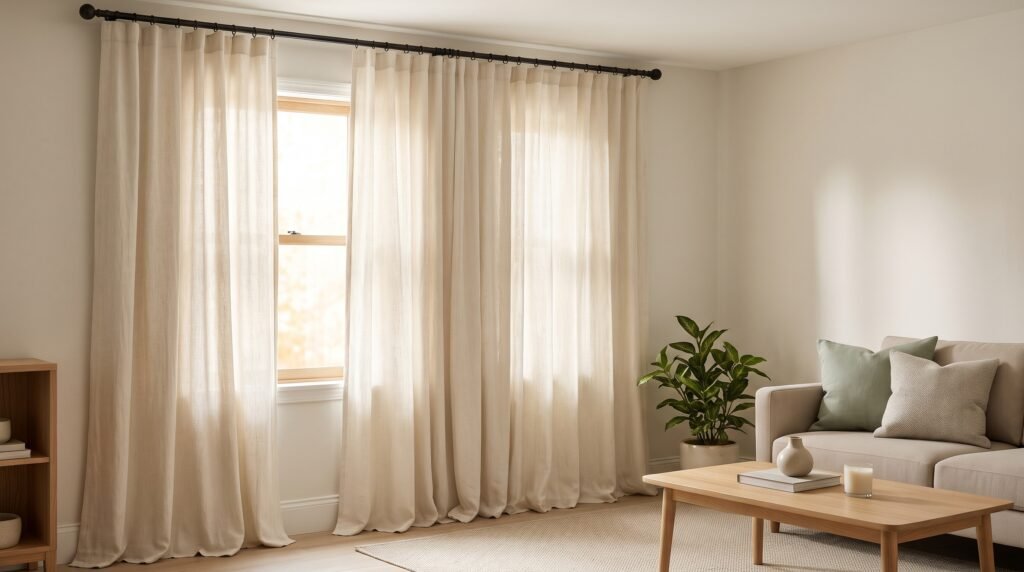
Sheer curtains are a useful choice when you want daylight to filter into your living room. Their lightweight appearance can soften a window without creating a heavy visual block.
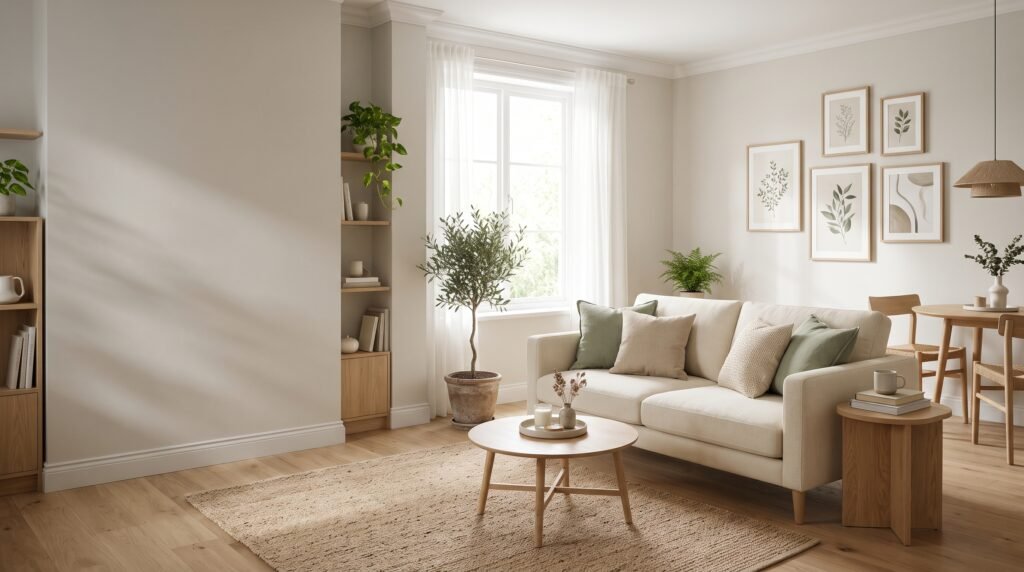
White, ivory, and soft beige sheers work well with many decorating styles, including Scandinavian, modern, and minimalist interiors. They can also pair nicely with wooden furniture, neutral sofas, and green plants.
However, sheer curtains offer limited privacy after dark when interior lights are on. If your living room faces a street or nearby homes, consider layering them with opaque curtains or using a suitable blind.
Budget tip: Before buying new curtains, measure your window and check whether existing curtain panels can be reused in another room.
When choosing curtains for a compact space, it is also important to consider the position of your sofa, coffee table, and other furniture. Explore our guide to small living room furniture layout ideas for practical ways to organize your space and create a comfortable layout.
2. Hang Curtains Higher to Emphasize Ceiling Height
One of the most useful curtain ideas for small living rooms is to place the curtain rod higher than the top of the window frame, provided there is enough space.
This creates a longer vertical line and can make the ceiling appear taller. For a more streamlined look, hang curtains close to the ceiling and choose panels long enough to reach near the floor.
Measure carefully before drilling. Account for the rod, rings, hooks, and the finished curtain length so the fabric does not end up too short or drag excessively.
For more guidance, see this curtain-hanging guide from Lowe’s.
3. Use Light Neutral Curtain Colors
Light neutral curtains can blend with the walls and help a small room feel visually calm. Consider warm white, cream, ivory, pale greige, or soft beige.
You do not have to match the curtains to the walls exactly. Instead, choose a shade that complements your wall color, sofa, rug, and other large pieces of furniture.
For example, cream curtains can soften a room with a beige sofa, while pale grey panels may work well with a cooler color palette.
Budget tip: If you already have neutral curtains, changing the cushion covers or adding a textured throw may be enough to refresh the room.
4. Try Floor-Length Curtains for a Finished Look
Floor-length curtains can create a continuous line from the top of the window to the floor. This often looks more cohesive than panels that stop halfway down the wall.
For everyday living rooms, measure so the curtain hem just skims the floor or sits slightly above it. This helps reduce dragging and makes vacuuming easier.
Short curtains can still be the right choice when a radiator, window seat, furniture arrangement, or other obstacle makes long panels impractical. Choose the length according to the room’s actual layout rather than following a rule blindly.
5. Choose Simple Patterns Instead of Busy Prints
Patterns can add personality, but large, high-contrast prints may compete with furniture and accessories in a compact room.
If you like patterned curtains, try subtle stripes, small botanical prints, fine checks, or a low-contrast geometric design. Keep the remaining decor relatively simple so the window treatment has room to stand out.
Vertical stripes can emphasize height, while a small-scale pattern can introduce interest without dominating the room. The overall effect depends on the pattern size, contrast, and the colors already present.
For a flexible option, use plain curtains and introduce patterns through cushions, rugs, or artwork that are easier to change later.
6. Layer Sheer and Opaque Curtains
Layering gives you more control over daylight and privacy. Hang sheer panels closer to the window and fuller curtains on a separate rod or track.
During the day, the sheers can soften incoming light. In the evening, close the outer panels when you need greater privacy or reduced glare.
This approach is especially useful for living rooms that serve several purposes, such as relaxing, watching television, working, or hosting guests.
Before choosing two layers, check how much wall space the curtain stack will occupy when the panels are open. In a very narrow room, one well-chosen curtain layer may be more practical.
7. Consider Linen-Look or Lightweight Textured Fabrics
The fabric affects how curtains hang and how much light they allow through. Linen and linen-look materials can give a living room a relaxed, natural appearance.
Cotton and lightweight polyester blends are other options, depending on your budget, cleaning preferences, and desired finish. Some fabrics wrinkle more easily than others, so check the care label before purchasing.
For a small room, a fabric with a soft drape often feels less visually heavy than thick, bulky panels. If you need stronger light control, look for lined options rather than assuming every lightweight curtain will provide enough coverage.
8. Extend the Curtain Rod Beyond the Window
A curtain rod that extends beyond the window frame allows the panels to sit farther to the sides when open. This can reveal more of the glass and help the window feel less enclosed.
Measure the available wall space on both sides before buying the rod. If the window sits close to a corner, a cabinet, or another window, you may need a narrower extension.
Use wall fixings appropriate for the wall type and the combined weight of the rod and curtains. Heavy curtains may require stronger brackets or additional support.
For detailed measuring advice, consult The Home Depot’s curtain-measuring guide.
9. Use Curtains to Complement Your Furniture
Curtains look more intentional when they relate to the room’s existing colors and textures. You can repeat a shade from the sofa, rug, cushions, or artwork without matching every item exactly.
For example:
- Neutral living room: Cream curtains with a beige sofa and warm wood accents.
- Green accent scheme: Soft ivory curtains with sage cushions and natural textures.
- Modern grey room: Pale grey curtains with a charcoal accent and simple accessories.
- Colorful living room: Plain curtains that balance patterned cushions or a statement rug.
In a small room, try to keep the overall palette coordinated. Too many competing colors and patterns can make the window area feel busy.
10. Consider Blinds with Curtains
If you need more control over privacy or sunlight, combine curtains with a suitable blind. A roller blind or another low-profile window covering can provide practical light control while curtains soften the edges of the window.
This can work well in living rooms facing neighboring properties or streets. Choose the blind based on how much light you want to block, how the window opens, and the privacy you need.
Remember that blackout materials are not always necessary in a living room. Consider how you use the space before paying for a feature you may rarely need.
11. Keep Curtain Hardware Simple
Decorative finials, elaborate tiebacks, and bulky rods can look attractive, but a simple rod or track may suit a compact room better.
Choose hardware that complements your other finishes, such as black, brushed metal, or a warm brass tone. The hardware does not need to match every fixture in the room; it should simply look intentional.
Make sure the rod can support the curtain fabric and that the panels can open and close easily. If you rent your home, check the property’s rules before drilling and consider a suitable no-drill option where practical.
How to Choose the Right Curtains for a Small Living Room
Before purchasing curtains, use this quick checklist:
- Measure the window: Record its width and the distance from the planned rod position to the desired hem.
- Decide on privacy: Sheer curtains provide filtered light but less privacy than opaque panels.
- Choose a color: Consider the walls, sofa, flooring, and other large elements.
- Select the fabric: Balance the look you want with cleaning needs and light control.
- Check the hardware: Make sure the rod, brackets, and fixings suit the curtain weight and wall.
- Plan the stack-back space: Confirm that the curtains can open without blocking too much of the glass or interfering with furniture.
The most suitable curtains are not necessarily the most expensive. Correct measurements, a practical fabric, and a coordinated color can make a bigger difference than elaborate decoration.The right curtains can make a small living room feel brighter and more spacious, but they work best when combined with thoughtful furniture placement, suitable colors, and good lighting. For more practical tips, read our guide on how to make a small living room look bigger to discover simple ways to create a more open and comfortable space.
Frequently Asked Questions
What color curtains are best for a small living room?
White, ivory, cream, pale beige, and soft grey are versatile choices. Select a shade that complements your wall color and furniture. A darker or more colorful curtain can also work if it suits the room’s overall palette.
Are sheer curtains good for small living rooms?
Yes, sheer curtains can filter daylight and create a light, airy appearance. They provide limited privacy at night, so consider layering them with opaque curtains or pairing them with a suitable blind when needed.
Should curtains touch the floor in a small living room?
Floor-length curtains often create a finished appearance. A hem that just skims the floor or sits slightly above it is practical for everyday use. Shorter curtains may be more suitable when radiators, furniture, or other obstacles are present.
Do curtains make a small room look bigger?
Curtains cannot change the actual dimensions of a room, but their color, length, and placement can influence how the space is perceived. Higher-mounted rods and long panels can emphasize vertical lines, while light fabrics can help preserve a bright appearance.
How wide should curtains be?
The total curtain width depends on the rod width, the fabric, and how full you want the panels to look. Measure the complete rod rather than just the glass, then check the manufacturer’s fullness and sizing guidance before buying.
Final Thoughts
The best curtain ideas for small living rooms focus on proportion, light, privacy, and simplicity. Sheer panels, light neutral colors, floor-length curtains, subtle patterns, and carefully positioned rods can all help create a balanced look.
Start by measuring your windows and deciding how much privacy and light control you need. Then choose curtains that complement your existing furniture instead of competing with it. With a few thoughtful decisions, you can create a living room that feels comfortable, coordinated, and welcoming.