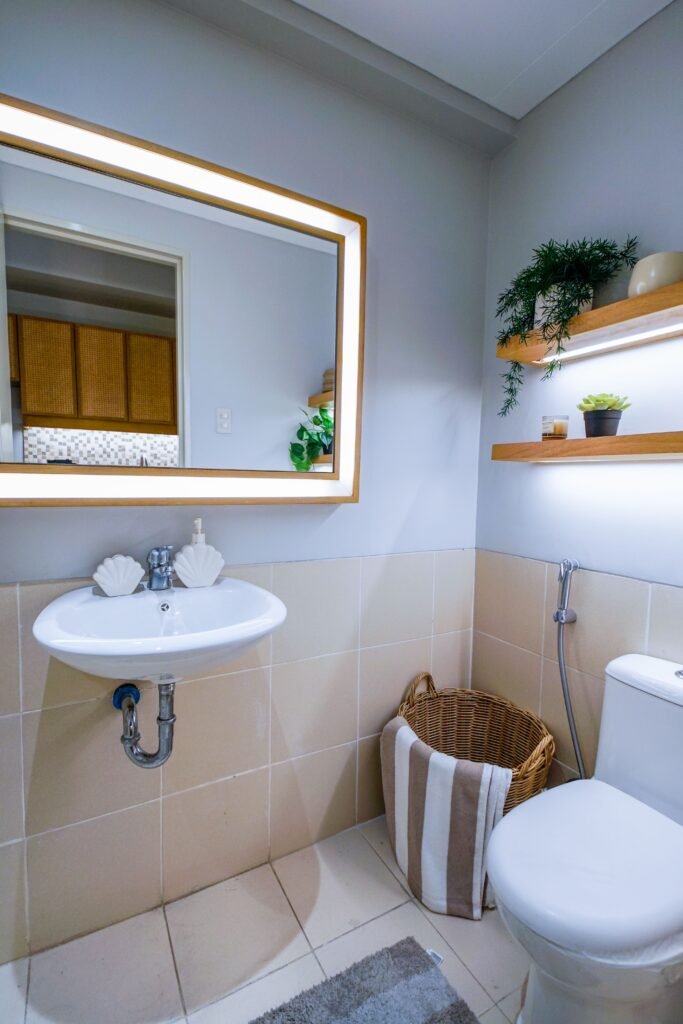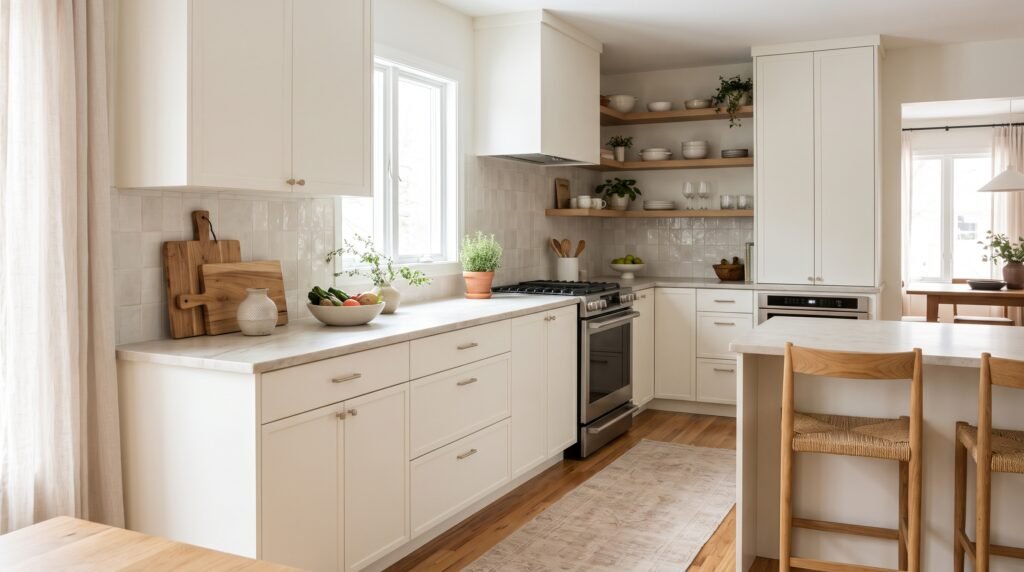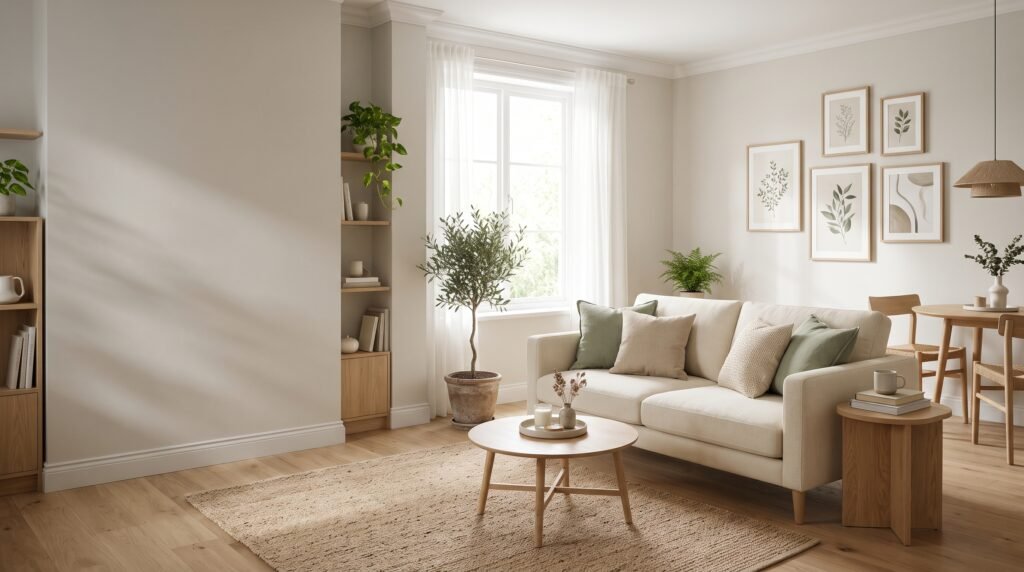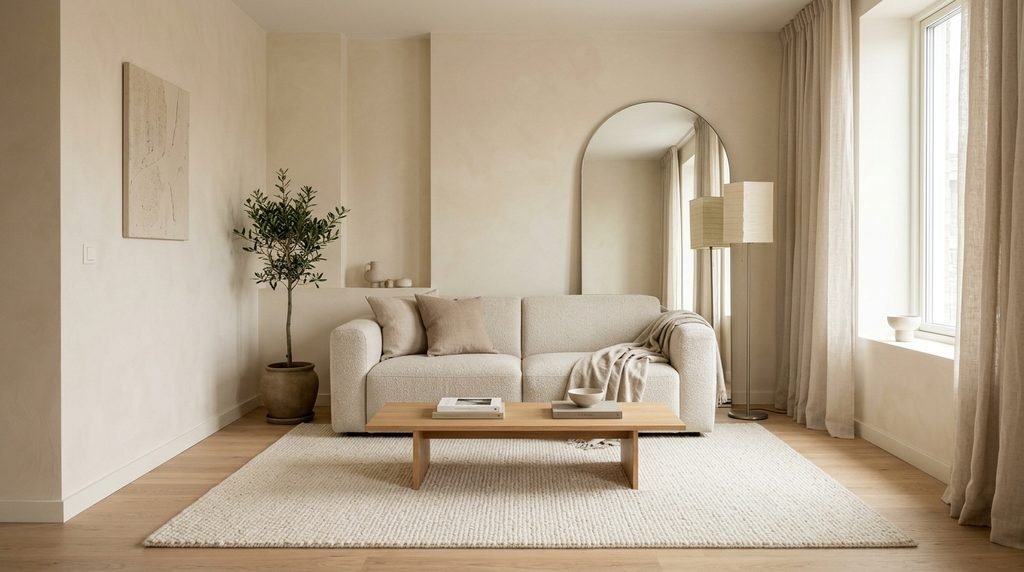
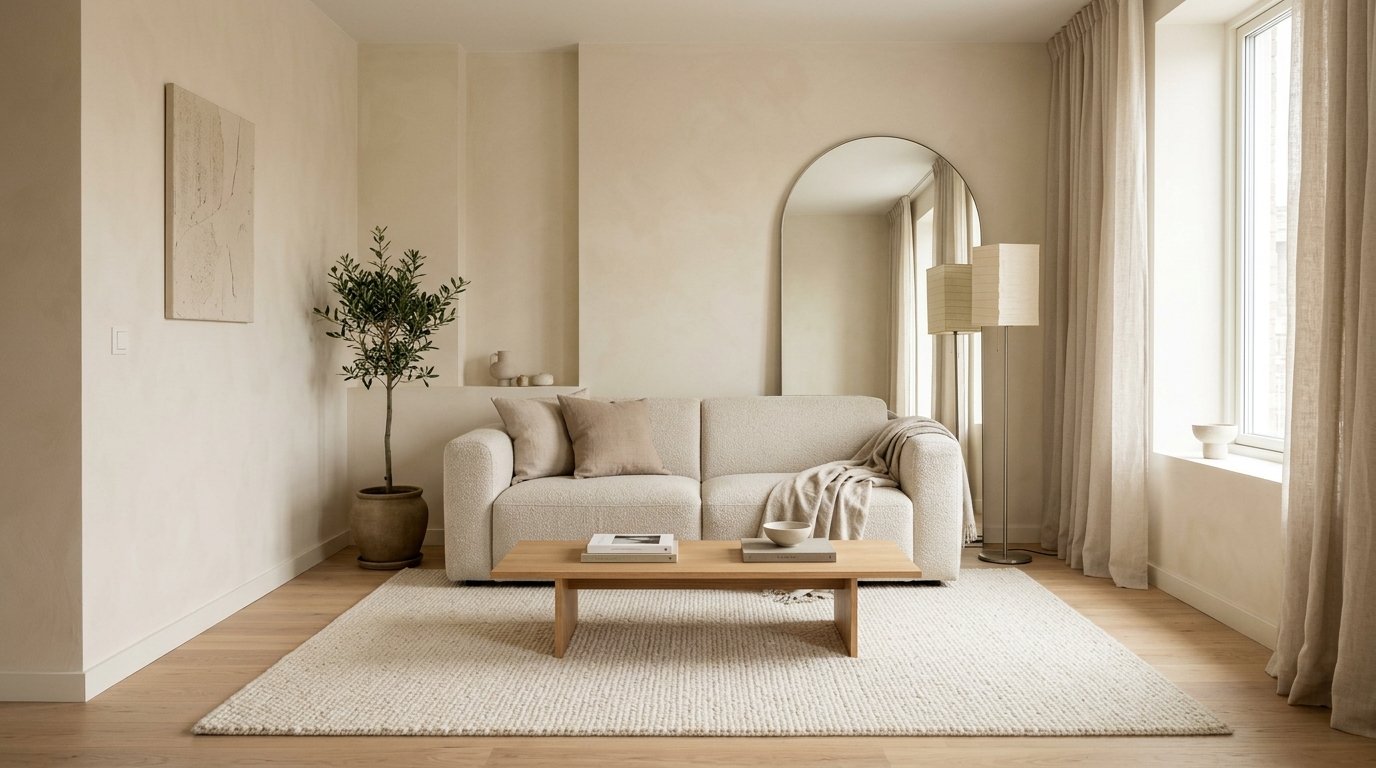
How to make a small living room look bigger is a common question when your space feels cramped but you still want it to look comfortable, stylish, and inviting. The good news is that you do not need a bigger sofa or an expensive renovation to make a difference.
Simple changes to your furniture arrangement, colors, lighting, mirrors, and decor can help create a more open feeling. The key is to use your available space wisely without making the room feel crowded.
Start by creating more visual space. Keep walkways clear, choose furniture that fits the room, use light strategically, and avoid filling every empty corner with decoration.
Here are 12 practical small living room ideas you can try.
1. Choose Furniture That Fits the Room
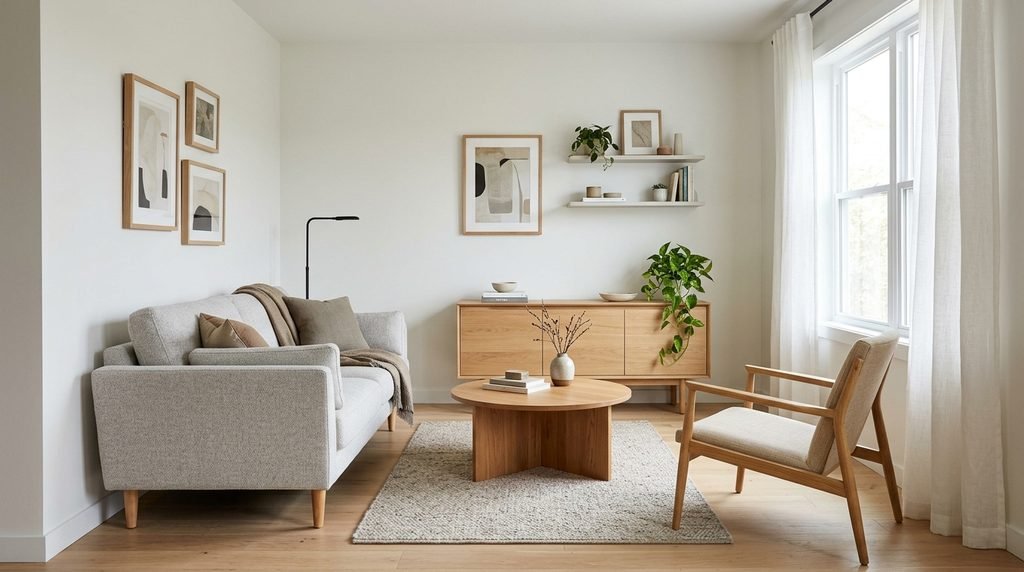
1. How to Make a Small Living Room Look Bigger With the Right Furniture
Oversized furniture is one of the easiest ways to make a small living room feel even smaller.
Before buying a sofa, measure the room and consider how much space you need for walking around it. A large sectional might look beautiful in a showroom but could overwhelm a compact living room.
Instead, consider:
- A compact sofa
- A slim accent chair
- A smaller coffee table
- Furniture with a simple shape
- Pieces that provide more than one function
The goal is not to use the smallest furniture possible. It is to choose pieces that are proportional to the room.
2. How to Make a Small Living Room Look Bigger by Keeping Walking Paths Clear
A room can feel small when furniture interrupts the natural path through the space.
Try to create an easy route between the main entrance, sofa, windows, and other frequently used areas.
You do not need every piece of furniture pushed against a wall. Sometimes moving a chair slightly or changing the position of a coffee table can make the entire room feel easier to navigate.
When arranging furniture, think about movement first and decoration second.
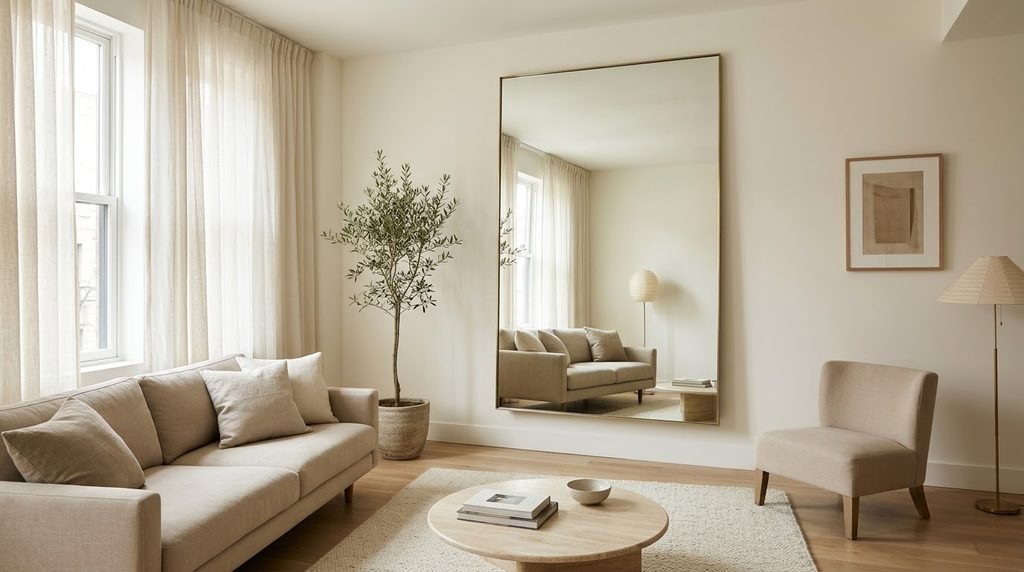
4. Add a Large Mirror
A mirror can be a useful decorating tool in a compact room.
Place a large mirror where it can reflect natural light or an attractive part of the room. For example, a mirror opposite or near a window can help bounce light around the space.
The important thing is placement.
One large, well-positioned mirror may look more effective than covering the walls with several small decorative mirrors.
Choose a frame that works with your existing decor so the mirror feels like part of the room rather than an extra object.
5. Let Natural Light In
Natural light can make a living room feel more open and welcoming.
If your windows are covered with heavy curtains throughout the day, try lighter window treatments that allow more daylight into the room.
You can also hang curtains slightly higher than the window frame and let them extend toward the floor. This can create a taller-looking window area.
Keep window sills relatively uncluttered too. Too many objects around a window can reduce the sense of openness.
6. Choose Furniture With Visible Legs
Furniture that sits directly on the floor can sometimes make a small room feel visually heavy.
Sofas, chairs, and cabinets with exposed legs allow more of the floor to remain visible.
This does not mean every piece needs tall legs. Even a small amount of visible floor underneath furniture can create a lighter appearance.
Look for simple designs with open bases instead of very bulky pieces.
7. Use the Right Rug Size
A rug can define the seating area, but the wrong size can make the room feel disconnected.
A tiny rug floating in the middle of a small living room may visually divide the space into separate pieces.
Instead, choose a rug that works with the scale of your seating arrangement. Ideally, the main furniture should feel connected to the rug rather than completely separated from it.
Before buying, measure the area and use painter’s tape to mark the approximate rug size on the floor. This gives you a better idea of how it will look.
8. Keep the Coffee Table Simple
A coffee table does not have to be large to be useful.
In a small living room, consider a compact table with a simple design. Round or oval shapes can also work well when you want to make movement around the table easier.
Another option is a nesting table. You can separate the tables when needed and stack them together when you want more open floor space.
Choose function over decoration. A coffee table covered with too many objects can quickly become another source of visual clutter.
9. Take Advantage of Vertical Space
When floor space is limited, look upward.
Wall-mounted shelves, tall bookcases, artwork, and vertical storage can draw attention upward while keeping the floor clearer.
However, avoid filling every inch of the wall.
A few carefully selected pieces usually create a cleaner appearance than a wall packed with frames, shelves, plants, and accessories.
Vertical storage is particularly useful if you live in a small apartment and need to make the most of limited floor space.
10. Reduce Visual Clutter
Sometimes the problem is not the size of the room. It is the number of things inside it.
Small objects scattered across tables, shelves, and the floor can make a room feel busy.
Try a simple decluttering session.
Remove anything you no longer use, then group similar items together. Keep frequently used objects accessible and store less-used items elsewhere.
A simple living room can still have personality. The idea is to give your favorite pieces enough space to stand out.
11. Use Multi-Functional Furniture
If your living room has limited space, choose furniture that can perform more than one job.
For example:
- An ottoman can provide seating and storage.
- A storage bench can work as seating and organization.
- A nesting table can provide extra surfaces when needed.
- A slim console can provide storage without taking up much floor space.
Multi-functional furniture is especially useful for renters and people living in apartments where every square foot matters.
12. Keep the Decor Simple and Intentional
You do not need to remove all decoration from a small living room.
Instead, choose a few pieces that add character without overwhelming the space.
A large piece of artwork can sometimes have more impact than a wall covered with many small frames. A few plants can add warmth without turning every surface into a display area.
Think about visual balance.
If one side of the room already has several decorative objects, keep the other side simpler. This helps the room feel organized rather than crowded.
Small Living Room Layout Tips
If you are rearranging your furniture, start with the largest piece, usually the sofa.
Place it first, then add the chairs and coffee table. Leave enough space for comfortable movement before adding smaller furniture.
A useful approach is to create one clear focal point. This could be a window, fireplace, artwork, television, or another architectural feature.
Once the main layout works, add smaller decorative pieces.
Remember that a good small living room layout should support how you actually use the room. If you regularly watch television, entertain guests, read, or work there, arrange the furniture around those activities.
How Can I Make a Small Living Room Look Bigger Without Renovating?
You can make a small living room look bigger without construction by changing the furniture arrangement, removing clutter, improving lighting, using mirrors, choosing lighter colors, and replacing oversized furniture with appropriately scaled pieces.
These changes can be done gradually, so you do not need to redesign the entire room at once.
Start with the changes that cost nothing: decluttering and rearranging furniture. Then consider affordable upgrades such as curtains, lighting, a mirror, or a better-sized rug.
Common Mistakes to Avoid in a Small Living Room
Even good decorating ideas can work against you if they are used incorrectly.
Avoid these common mistakes:
Buying furniture before measuring
Always measure your room, doorways, and furniture before making a purchase.
Blocking natural light
Avoid placing tall furniture directly in front of windows unless necessary.
Using too many small decorations
Lots of tiny objects can create visual noise.
Choosing an extremely small rug
A rug that is too small can make the seating area feel disconnected.
Filling every empty corner
Empty space is not wasted space. It can help the room breathe.
Final Thoughts
Making a small living room look bigger is mostly about visual balance and smart space planning.
You can start by removing unnecessary clutter, improving the furniture layout, and allowing more light into the room. From there, consider a cohesive color palette, strategically placed mirrors, furniture with visible legs, and storage that uses vertical space.
You do not have to follow every idea in this guide. Choose the changes that make sense for your room and your lifestyle.
A small living room can be both practical and beautiful. With thoughtful choices, you can create a space that feels comfortable without feeling crowded.
Frequently Asked Questions
What is the fastest way to make a small living room look bigger?
Decluttering and rearranging furniture are two of the easiest changes. Clear walking paths and remove unnecessary pieces that take up visual or physical space.
Does painting a small living room white make it look bigger?
Light colors can make a room feel brighter and more open, especially when combined with good natural or artificial lighting. White is one option, but cream, beige, and soft gray can also work well.
Where should I put a mirror in a small living room?
Try placing a mirror where it can reflect natural light or an attractive part of the room. Near a window can be effective, depending on the layout.
Should a small living room have a large rug?
A properly sized rug can help connect the seating area. Instead of choosing a very small rug simply because the room is small, measure the seating area first and select a size that visually connects the furniture.
How do I arrange furniture in a very small living room?
Start with the sofa and create a clear path through the room. Add only the furniture you actually need, then use compact or multi-functional pieces where possible.
Can dark colors work in a small living room?
Yes. Dark colors do not automatically make a small room look bad. They can be used on an accent wall, furniture, curtains, or accessories while lighter elements help maintain balance.