Table of Contents
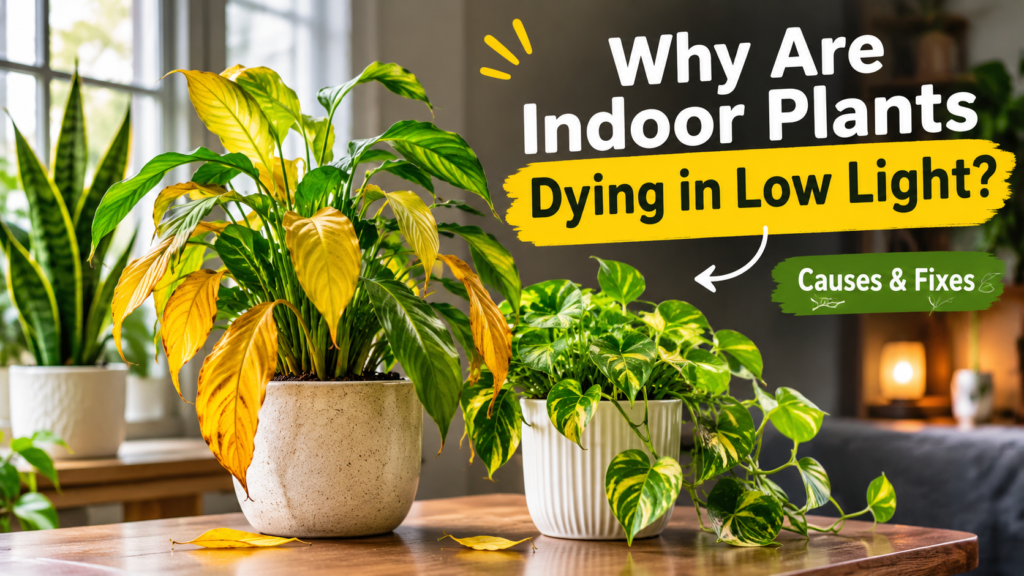
Indoor plants can make a home feel fresh, calm and welcoming. But what happens when your favourite houseplants start looking unhealthy? Their leaves may turn yellow, stems become weak, growth slows down, or the plant may gradually lose its leaves.
One common reason is insufficient light. Although some houseplants can tolerate low-light conditions, they still need enough light to grow and produce energy. A dark corner that looks perfect for decorating may not provide the conditions your plant needs.
If you notice indoor plants dying in low light, the first step is to identify what is causing the problem. Insufficient light, overwatering, poor drainage and seasonal changes can all affect plant health.
In this guide, you’ll learn how to recognize the warning signs, understand common causes and help struggling houseplants recover.
Quick Answer: Why Are Indoor Plants Dying in Low Light?
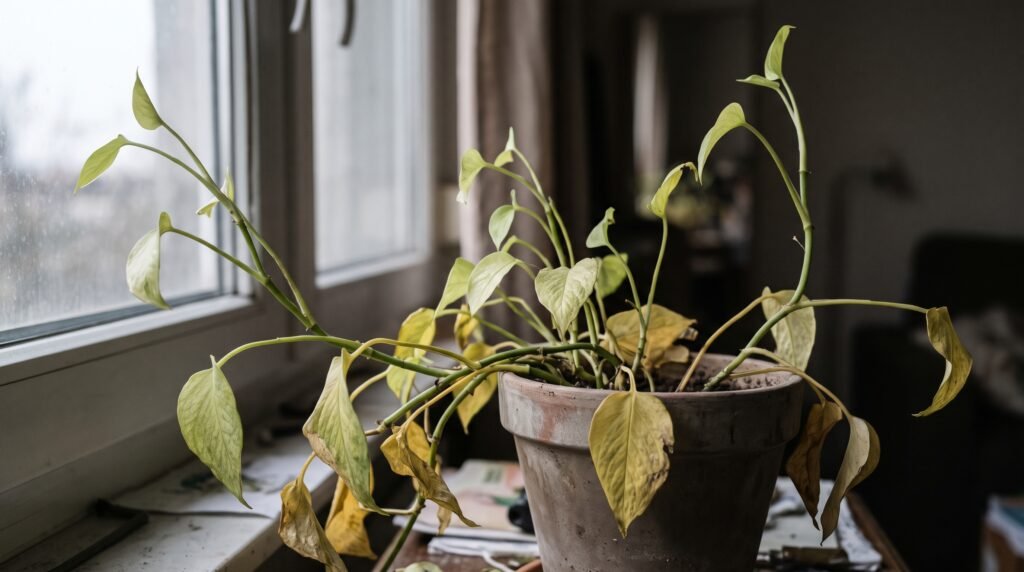
Indoor plants may struggle in low light because they cannot receive enough energy for healthy growth. This can lead to weak stems, pale leaves, slow growth and leaf loss.
However, insufficient light is not always the only problem. Plants in darker rooms often use water more slowly, which means frequent watering can leave the soil wet for too long.
To help a struggling plant, move it gradually to a brighter location with suitable indirect light, check the soil before watering, make sure the pot has drainage holes and inspect the roots for damage.
7 Signs Your Indoor Plant Is Not Getting Enough Light
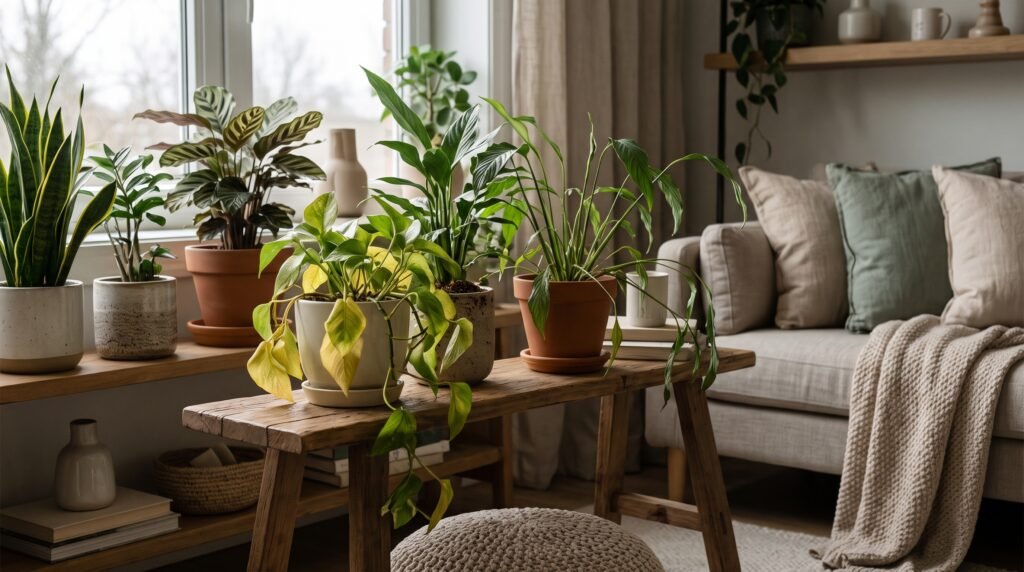
Recognizing early warning signs can help you make changes before your plant becomes severely stressed.
1. Long and Weak Stems
One noticeable sign of insufficient light is leggy growth.
You may notice unusually long stems with large gaps between leaves. Instead of growing compactly, the plant stretches towards the nearest window or light source.
This happens because the plant is responding to limited light.
How to fix it: Move the plant gradually closer to a suitable window where it can receive more natural light. Avoid suddenly placing a shade-tolerant plant in strong direct sunlight.
2. Yellowing Leaves
Yellow leaves can be a sign that your indoor plant is struggling, but they do not automatically mean it needs more light.
Insufficient light, excessive watering, poor drainage, pests and other environmental problems can all cause yellowing.
According to the Royal Horticultural Society’s guide to houseplant leaf damage, yellow leaves can have several different causes, including unsuitable light and watering conditions.
How to fix it: Check the soil moisture, drainage and lighting conditions before changing your watering routine.
3. Slow or No New Growth
Does your indoor plant look exactly the same for months?
Slow growth can be normal during cooler or darker seasons. However, if your plant receives very little light, it may struggle to produce healthy new leaves.
Plants need light for photosynthesis, the process through which they produce energy for growth.
How to fix it: Find a brighter position that suits your plant’s light requirements. Give it time to adjust before making additional changes.
4. Smaller Leaves Than Before
If new leaves are noticeably smaller than older healthy leaves, your plant may not be receiving the conditions it needs.
Insufficient light can affect leaf development and overall plant growth.
However, small leaves can also be associated with root problems, nutrient issues or other growing conditions.
How to fix it: Check the plant’s light requirements and inspect its growing environment. Avoid adding extra fertilizer immediately without identifying the cause.
5. Lower Leaves Falling Off
Some houseplants naturally lose older leaves as they grow. But when several leaves fall while the plant looks weak, it is worth investigating.
Low light can contribute to leaf loss, particularly when a plant is moved from a brighter environment into a darker room.
How to fix it: Give the plant a more suitable location and avoid unnecessary movement between different lighting conditions.
6. Pale or Faded Leaf Colour
Some plants develop pale or less vibrant foliage when they do not receive enough light.
Variegated plants may also lose some of their distinctive colour patterns in unsuitable lighting conditions.
Compare newer leaves with older healthy growth to see whether the appearance is changing.
How to fix it: Adjust the plant’s position according to its specific light requirements rather than placing it directly in intense sunlight.
7. The Plant Looks Weak Despite Regular Watering
Many plant owners assume that a struggling plant needs more water.
Unfortunately, this can make things worse.
Plants in low-light environments generally use water more slowly because their growth may decrease. If you continue watering as frequently as before, the soil may remain wet for too long.
This can damage roots and contribute to root rot.
How to fix it: Check the soil before watering. Allow it to dry to the level appropriate for your particular plant.
6 Common Reasons Indoor Plants Die in Low-Light Rooms
Low light is an important factor, but several related problems can affect indoor plants.
Not Enough Natural Light
A room may look bright to your eyes but still provide insufficient light for certain houseplants.
Distance from windows, curtains, nearby buildings and seasonal daylight changes can all affect how much light reaches a plant.
A plant placed several feet away from a window may receive much less light than one sitting close to it.
Solution: Observe the room throughout the day and choose a location that provides the right amount of natural light for your plant.
Overwatering in Dark Rooms
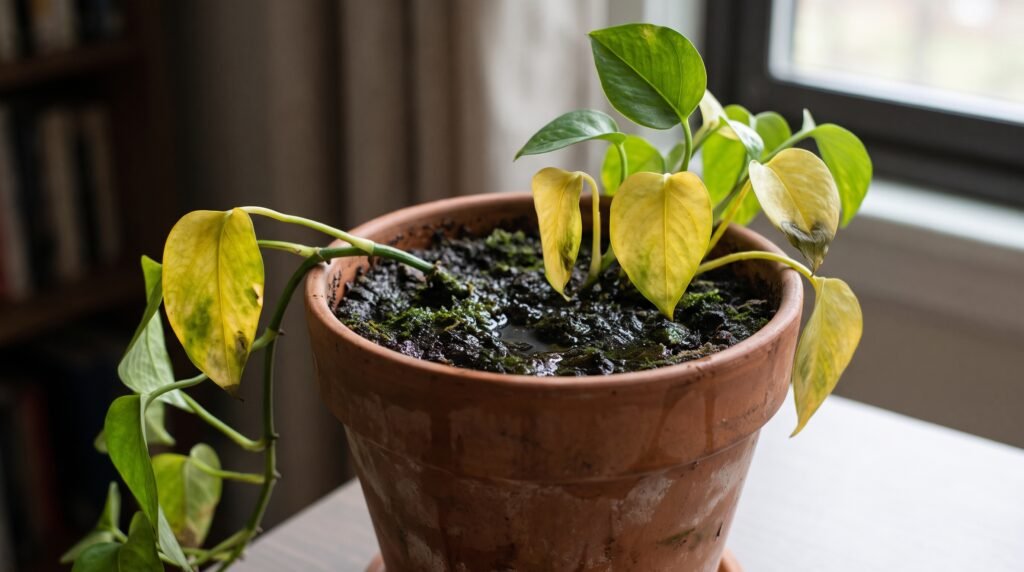
Overwatering is a common problem in indoor plant care.
When light levels are low, plants may grow more slowly and use less water. Watering on a fixed schedule without checking the soil can leave roots sitting in wet conditions.
The University of Minnesota Extension guide to indoor plant lighting explains that plants in lower-light conditions grow more slowly and use less water.
Solution: Check the soil moisture before watering. Use a pot with drainage holes and empty excess water from the saucer or outer container.
Choosing the Wrong Plant for the Room
Not every indoor plant can tolerate the same lighting conditions.
A plant that needs bright indirect light may struggle in a dark corner, even if you water and fertilize it correctly.
Before buying another houseplant, understand its lighting needs.
If you are choosing plants for a darker home, explore our guide to the best indoor plants for low-light rooms. It covers plant choices for rooms that receive less natural light.
Poor Air Circulation
A crowded plant corner can make it harder to inspect leaves, notice pests and maintain a suitable growing environment.
Poor air circulation can also contribute to moisture-related problems in some conditions.
Solution: Give plants enough space and avoid keeping their leaves pressed against walls or other plants.
Incorrect Pot and Soil Conditions
A decorative pot without drainage holes can allow excess water to collect around the roots.
Similarly, heavy or poorly draining potting media can remain wet for too long.
Solution: Use a suitable houseplant potting mix and a container with drainage holes. Choose a pot size appropriate for the plant’s root system.
Seasonal Changes in Daylight
Indoor plants can struggle when daylight hours become shorter during autumn and winter.
A plant that received sufficient light during summer may suddenly find itself in a much darker environment.
Solution: Reassess plant positions when the seasons change. Move plants closer to suitable windows if necessary, while protecting them from cold drafts and unsuitable temperature changes.
How to Save Indoor Plants Dying in Low Light
If you notice indoor plants dying in low light, don’t immediately throw them away. Start with these practical steps.
Step 1: Move It to a Brighter Location
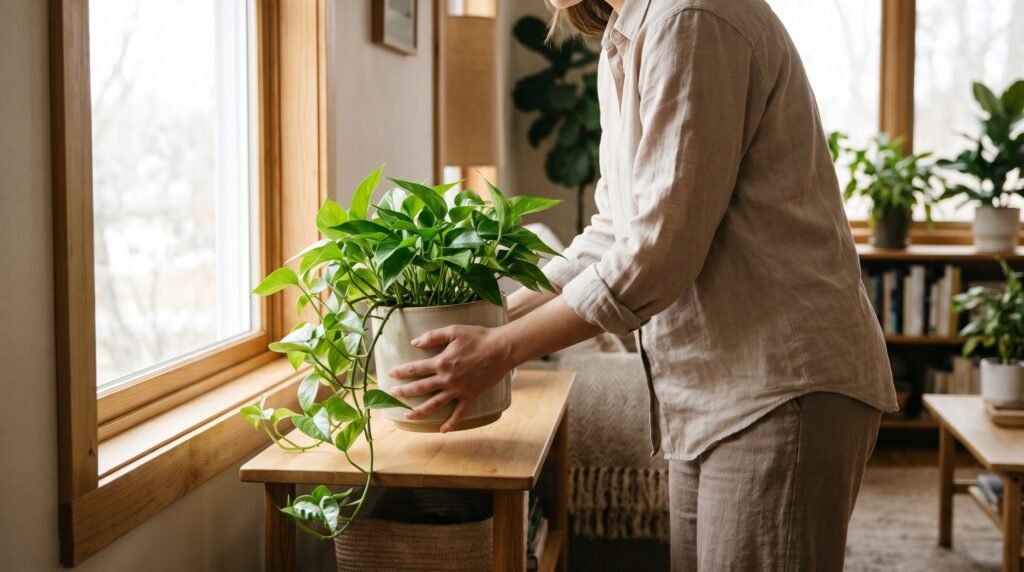
Find a place where your plant can receive more suitable natural light.
A position near a window with bright, indirect light may work for many common houseplants.
Different plants have different requirements. Some tolerate shade better than others.
Avoid moving a plant from a dark corner straight into intense direct sunlight. Make lighting changes gradually.
Step 2: Check the Soil Before Watering
Push your finger into the soil to check whether it is still damp.
If the soil is wet, wait before watering again, taking the plant’s specific needs into account.
Do not follow a strict watering schedule without considering the room temperature, light levels, pot size and plant type.
Step 3: Inspect the Roots
If the plant continues to wilt despite appropriate watering, inspect its roots.
Healthy roots are generally firm, while rotting roots may appear dark, soft and damaged.
If you find root rot, remove the affected roots with clean tools and repot the remaining healthy plant material in fresh, suitable potting mix.
Severe root damage may not be reversible.
Step 4: Remove Dead and Damaged Leaves
Use clean scissors to remove completely dead or badly damaged leaves.
Do not remove every yellowing leaf at once. First identify the underlying problem and allow the plant to adjust.
Healthy green leaves help the plant continue producing energy.
Step 5: Consider a Grow Light
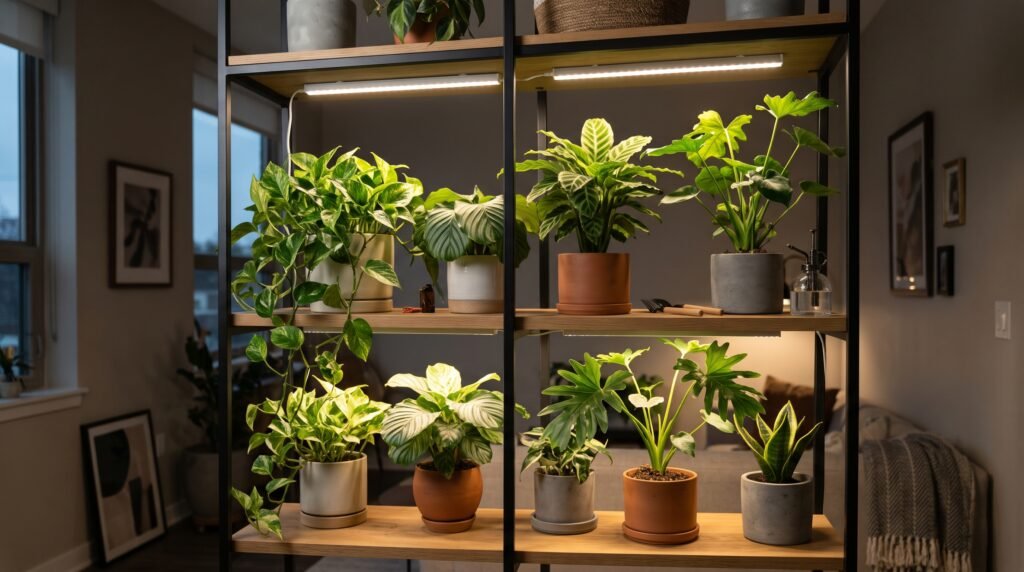
If your room does not receive enough natural daylight, an appropriate plant grow light can help.
Choose a grow light designed for plants rather than assuming an ordinary decorative bulb will provide everything they need.
Follow the manufacturer’s recommended distance and lighting duration. Plants also need periods of darkness.
A grow light can be particularly useful for apartments, interior rooms and spaces with limited window access.
How to Prevent Indoor Plants from Dying in Low Light
Once your plant starts recovering, maintaining suitable conditions becomes important.
Here are some simple habits:
- Check the lighting needs before purchasing a new plant.
- Avoid placing plants in completely dark corners.
- Check soil moisture before watering.
- Use pots with proper drainage.
- Inspect leaves regularly for pests and damage.
- Keep plants away from cold drafts and direct heat sources.
- Adjust watering as daylight and temperatures change.
- Avoid unnecessary fertilizer when a plant is already stressed.
Remember that low-light tolerant does not mean no-light tolerant. All living houseplants need an appropriate source of light.
Can Indoor Plants Survive Without Sunlight?
Indoor plants cannot survive indefinitely in complete darkness.
Plants need light for photosynthesis, which allows them to produce the energy required for survival and growth.
Some plants can tolerate lower light levels than others, but even shade-tolerant houseplants need some natural or suitable artificial light.
If you have a room without windows, consider using a suitable grow light or choosing another location for your plants.
Final Thoughts
When indoor plants are dying in low light, the problem may not be as simple as moving them closer to a window. Insufficient light, overwatering, poor drainage and unsuitable growing conditions can all contribute to unhealthy plants.
Start by observing the leaves and stems, checking the soil and understanding your plant’s specific lighting requirements.
Make small changes instead of changing everything at once. With suitable light, careful watering and regular observation, many struggling indoor plants have a chance to recover.
A healthy indoor garden does not require a home full of sunny windows. It requires choosing suitable plants and giving them the conditions they need to grow.
Frequently Asked Questions
Why are my indoor plants dying even though I water them regularly?
Regular watering does not always mean healthy plants. Overwatering, poor drainage, insufficient light and root problems can all cause plants to decline. Check the soil before adding more water.
Can low-light indoor plants survive in a dark corner?
Some plants tolerate shade, but no houseplant can grow indefinitely in complete darkness. Even low-light tolerant plants need some natural or suitable artificial light.
How do I know if my plant needs more light or less water?
Look at several signs together. Weak, stretched stems and slow growth may indicate insufficient light. Wet soil, yellowing lower leaves and soft roots can suggest overwatering. More than one problem may be present.
Should I cut off yellow leaves from indoor plants?
Remove completely dead or badly damaged leaves using clean scissors. However, investigate why the leaves are turning yellow before removing large amounts of foliage.
Can grow lights save dying indoor plants?
A suitable grow light can help if insufficient light is the main problem. However, it will not fix root rot, pests, poor drainage or other unrelated issues.
Why do indoor plants struggle more during winter?
Winter often brings shorter daylight hours and lower indoor light levels. Plants may also grow more slowly and use less water, so continuing a summer watering routine can cause problems.
How long does it take for a struggling indoor plant to recover?
Recovery depends on the plant species and how much damage it has suffered. Look for signs of healthier new growth rather than expecting damaged leaves to become green again.