Table of Contents
A bad smell coming from your kitchen sink can make the entire kitchen feel unpleasant, even when everything else is clean. Sometimes the odor smells like rotten food, while other times it resembles rotten eggs or damp garbage.
If you are wondering how to stop kitchen sink smelling, the good news is that many common sink odors can be reduced with simple cleaning and regular maintenance.
Food particles, grease, soap residue and buildup inside the drain can all contribute to unpleasant smells. The key is to identify the likely cause before choosing the right cleaning method.
In this guide, you will discover nine practical ways to remove kitchen sink odors, clean the drain and prevent unpleasant smells from returning.
Why Does Your Kitchen Sink Smell Bad?
Before cleaning your sink, it helps to understand where the smell might be coming from.
Common causes include:
- Food particles: Small pieces of food can become trapped inside the drain or garbage disposal.
- Grease buildup: Cooking oil and grease can stick to the inside of drain pipes.
- Dirty garbage disposal: Food residue can collect around the blades and rubber splash guard.
- Drain buildup: Soap residue and other debris can contribute to unpleasant smells.
- Dry P-trap: A drain trap that has lost its water seal may allow sewer gases to enter the kitchen.
- Plumbing problems: Blockages, leaks or damaged plumbing connections can cause persistent smells.
Identifying the cause makes it easier to choose the right solution.
How to Stop Kitchen Sink Smelling: 9 Easy Fixes
1. Flush the Drain With Hot Water
One of the simplest ways to start cleaning a smelly kitchen sink is by flushing the drain with hot tap water.
Hot water can help loosen some greasy residue and move away loose food particles.
How to do it:
- Remove any visible food debris from the sink.
- Turn on the hot water tap.
- Let the water run into the drain for a minute or two.
- Check whether the smell improves.
Use hot tap water rather than boiling water, especially if you have plastic drain pipes or a garbage disposal. Follow your plumbing manufacturer’s recommendations.
2. Clean the Kitchen Sink Drain Opening
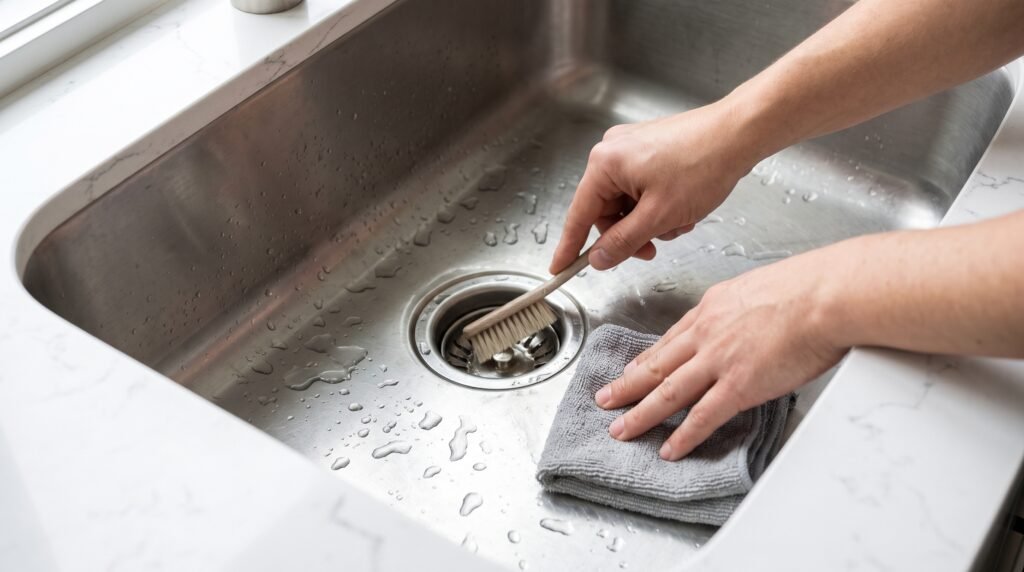
Sometimes the smell does not come from deep inside the pipes. Food residue and grease can collect around the drain opening and create an unpleasant odor.
How to clean it:
- Remove the drain strainer if it is removable.
- Pick out visible food particles.
- Apply a little dish soap to a cleaning brush.
- Scrub around the drain opening and underneath the removable strainer.
- Rinse thoroughly with warm water.
Pay attention to the edges and small grooves where residue can easily collect.
For more ideas on keeping a kitchen organised and easier to clean, read our guide to small kitchen storage ideas.
3. Clean the Garbage Disposal
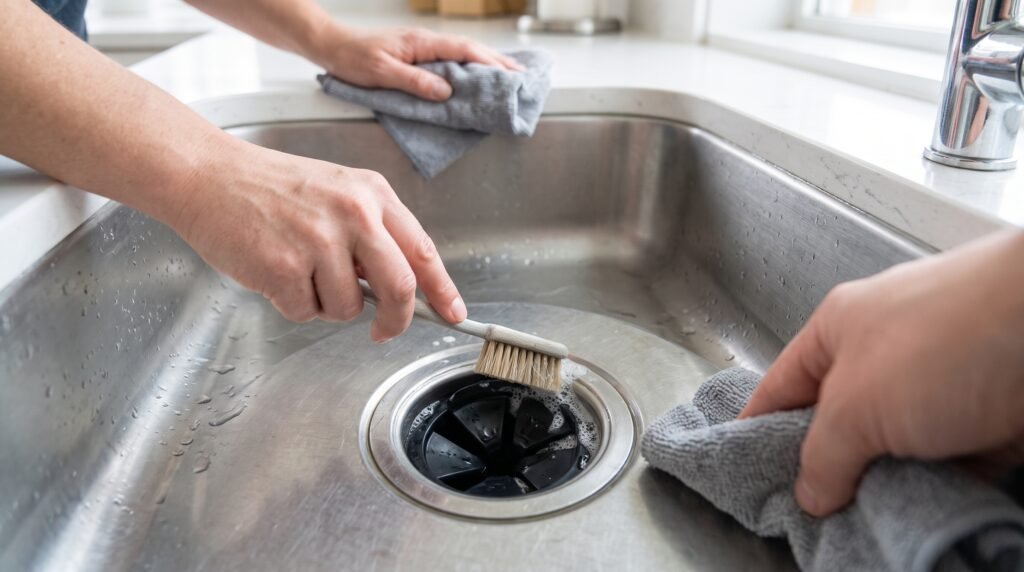
If your kitchen has a garbage disposal, trapped food particles may be responsible for the smell.
The rubber splash guard is an area that often gets overlooked during regular kitchen cleaning.
How to clean it safely:
- Switch off the garbage disposal and disconnect its power before cleaning.
- Never put your hands inside the disposal.
- Clean the rubber splash guard using a long-handled brush and dish soap.
- Remove accessible debris with appropriate tools, following the manufacturer’s instructions.
- Restore power only after cleaning is complete.
For additional manufacturer guidance, see Whirlpool’s guide to removing garbage disposal odors.
4. Use Baking Soda and Vinegar Carefully
If you are looking for simple ways to learn how to stop kitchen sink smelling, baking soda and vinegar are common household cleaning ingredients worth considering.
They can help loosen some light residue around a drain, although the fizzing reaction does not guarantee that a blocked or heavily soiled pipe will become clean.
How to use them:
- Pour approximately half a cup of baking soda into the drain.
- Slowly add approximately half a cup of white vinegar.
- Allow the mixture to fizz briefly.
- Rinse with warm water.
Important safety tip: Never combine vinegar with bleach or commercial drain cleaners. Avoid using this method if you have already applied another drain-cleaning chemical.
5. Wash the Sink Strainer or Drain Basket
A dirty sink strainer can hold food scraps, grease and other residue. Even if the drain itself is clean, a dirty strainer can continue producing unpleasant smells. Cleaning it is another useful step when learning how to stop kitchen sink smelling.
Follow these steps:
- Remove the drain basket or strainer.
- Empty trapped food scraps into the rubbish bin.
- Wash it with warm water and dish soap.
- Scrub small holes and corners with a brush.
- Rinse and dry before putting it back.
Cleaning the strainer regularly is a simple way to keep your kitchen sink fresh and prevent unpleasant drain odors.
6. Clean Around the Rubber Drain Flap
If you have a garbage disposal, check the rubber splash guard carefully. This is an important area to inspect when figuring out how to stop kitchen sink smelling, especially if the odor remains after cleaning the basin.
Food residue can stick underneath its flexible rubber sections, creating a smell that is difficult to remove with ordinary rinsing.
Use a long-handled cleaning brush and dish soap to clean accessible surfaces.
Always keep the disposal switched off and disconnected from power while cleaning. Never reach inside the unit.
7. Check the P-Trap Under Your Sink
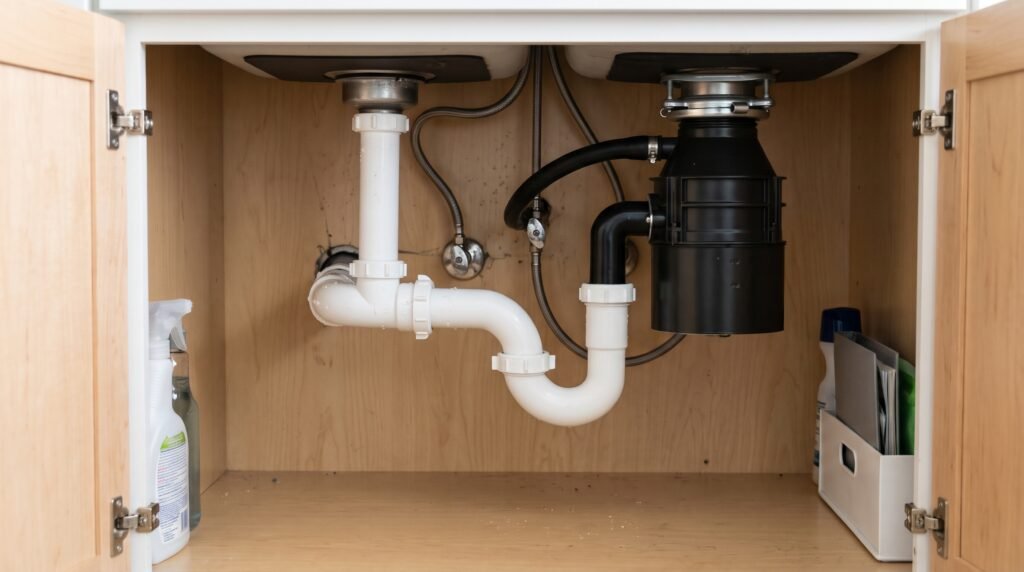
If the smell resembles sewage or rotten eggs, the problem may be related to the plumbing rather than surface dirt. Understanding the P-trap can help you identify why ordinary cleaning methods may not solve the problem when researching how to stop kitchen sink smelling.
A P-trap is the curved section of pipe beneath your kitchen sink. It normally holds water that creates a barrier against sewer gases.
If a sink has not been used for a long time, water in the trap may evaporate.
What you can do:
- Run water into the sink for a short time.
- Allow the P-trap to refill.
- Check whether the odor disappears.
If the smell continues, the trap may have a leak, blockage or installation problem. Contact a qualified plumber rather than dismantling unfamiliar plumbing.
8. Keep Grease and Food Scraps Out of the Drain
One of the best ways to prevent kitchen sink odors is to stop food and grease from entering the drain in the first place.
Grease can stick to pipes, while food scraps can collect in the disposal or drain system.
Try these simple habits:
- Scrape leftover food into the rubbish or compost bin.
- Wipe greasy pans with a paper towel before washing.
- Use a suitable sink strainer.
- Empty the strainer regularly.
- Never pour cooking oil or melted grease down the drain.
The US Environmental Protection Agency’s septic system guidance also recommends keeping cooking grease, oil and food waste out of drains, particularly in homes with septic systems.
9. Call a Plumber if the Smell Keeps Returning
Sometimes cleaning is not enough. If you have tried these methods for how to stop kitchen sink smelling and the odor keeps returning, there may be a deeper plumbing issue.
Watch for these warning signs:
- A persistent sewage smell.
- Water draining very slowly.
- Gurgling sounds from the drain.
- Water leaking beneath the sink.
- Bad odors coming from multiple drains.
These problems may indicate a blocked drain, damaged pipe, faulty trap or venting issue.
A qualified plumber can inspect the plumbing and identify the actual cause instead of relying on repeated cleaning.
How to Prevent Kitchen Sink Smells From Coming Back
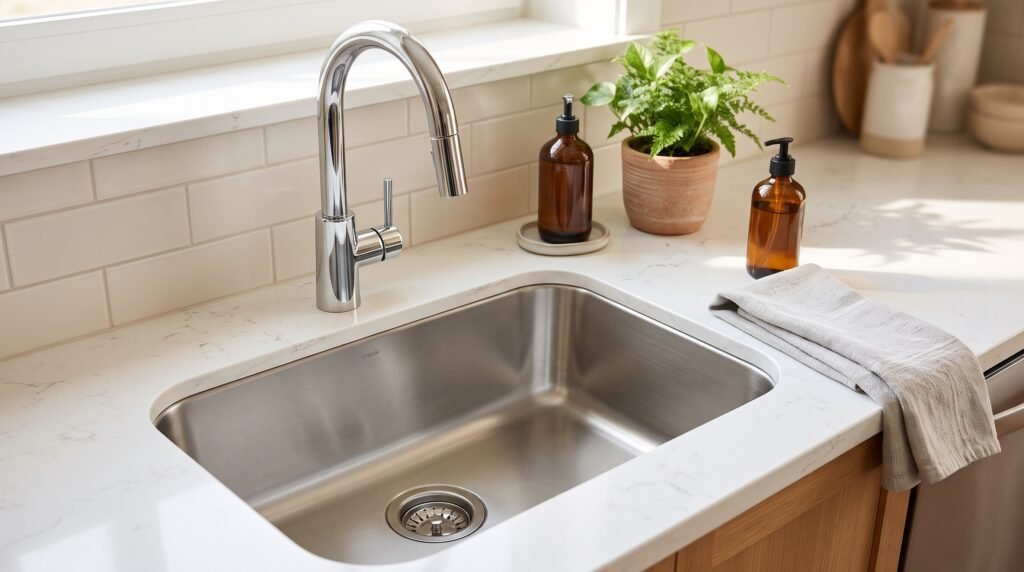
Knowing how to keep your sink clean is just as important as removing an existing odor. A few everyday habits can help keep your kitchen sink fresh.
Clean Your Sink Every Day
Wash the sink basin with dish soap and a soft sponge after preparing meals. Pay attention to the drain opening, corners and strainer.
Use a Sink Strainer
A removable sink strainer catches food scraps before they enter the drain. Empty and wash it regularly.
Avoid Pouring Cooking Oil Down the Drain
Allow used cooking oil and grease to cool, then dispose of them in an appropriate waste container. Wipe greasy cookware before washing.
Run Water Regularly
If you have a sink that is rarely used, run water periodically to keep its P-trap filled. This helps maintain the water seal that blocks sewer gases.
Clean Your Garbage Disposal Regularly
If your sink has a garbage disposal, follow the manufacturer’s cleaning instructions. Pay particular attention to the rubber splash guard, where food residue can collect.
When Is a Kitchen Sink Smell a Plumbing Problem?
Not every unpleasant smell can be fixed with household cleaning. If you are trying to understand the cause of a persistent kitchen sink odor, identifying its source is an important step.
Use these clues to understand what might be happening:
| What you notice | Possible cause |
|---|---|
| Rotten food smell | Food residue in the drain |
| Sour or greasy smell | Grease and organic buildup |
| Rotten egg or sewage smell | Possible sewer gas or plumbing issue |
| Smell with slow drainage | Possible blockage |
| Smell returning after cleaning | Deeper buildup or plumbing problem |
A dry P-trap can allow sewer gases to enter your home because the normal water barrier is missing. If running water does not solve the problem, or you notice leaks or persistent sewage odors, contact a plumber.
Kitchen Sink Cleaning – Dos and Don’ts
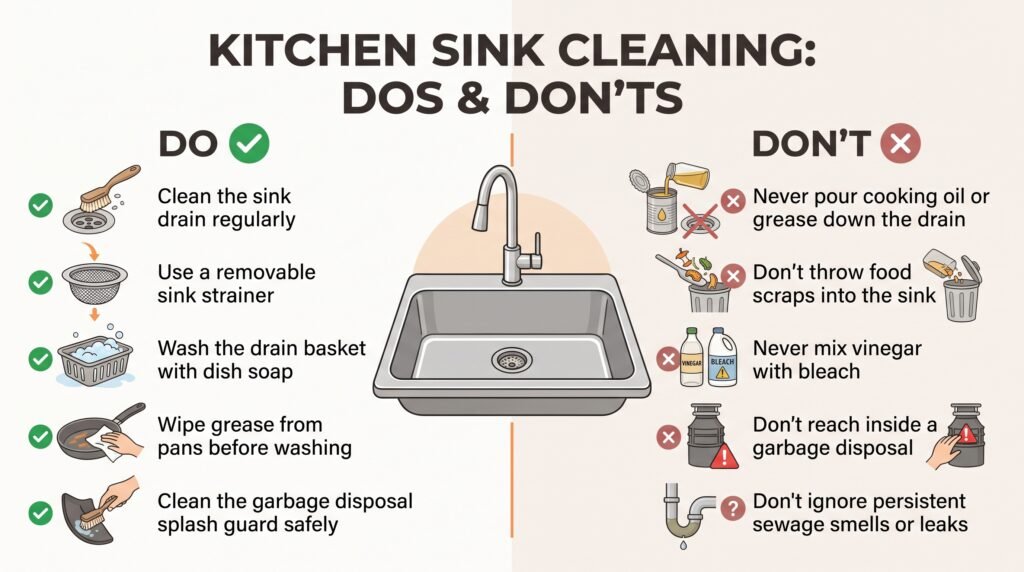
Create a clean, attractive 16:9 educational infographic for a home decor and cleaning blog. Topic: “Kitchen Sink Cleaning: Dos and Don’ts”.
Use a balanced two-column layout.
LEFT SIDE – DO:
- Clean the sink drain regularly.
- Use a removable sink strainer.
- Wash the drain basket with dish soap.
- Wipe grease from pans before washing.
- Clean the garbage disposal splash guard safely.
RIGHT SIDE – DON’T:
- Never pour cooking oil or grease down the drain.
- Don’t throw food scraps into the sink.
- Never mix vinegar with bleach.
- Don’t reach inside a garbage disposal.
- Don’t ignore persistent sewage smells or leaks.
Use simple, attractive illustrations of a modern stainless steel kitchen sink, cleaning brush, drain strainer, dish soap, food scraps and cooking oil container. Use green check marks for DO and muted red crosses for DON’T. White background, warm neutral tones, subtle orange accents, modern editorial infographic style, large readable typography, clean spacing, professional home improvement blog design. Ensure all text is spelled correctly. No logos, no watermark.
Frequently Asked Questions
Why does my kitchen sink smell like rotten eggs?
A rotten egg smell may be associated with hydrogen sulfide or sewer gases. Food residue inside the drain can also produce unpleasant sulfur-like odors. If the smell persists after cleaning, have the plumbing inspected.
Why does my kitchen sink smell even after cleaning?
The smell may be coming from an area you have not cleaned, such as underneath the drain strainer, the garbage disposal splash guard or the P-trap. A plumbing issue can also cause recurring odors.
Can baking soda and vinegar remove kitchen sink smells?
They can help freshen a drain and loosen some light surface residue, but they are not a guaranteed solution for deep buildup or blockages. Never combine vinegar with bleach or commercial drain cleaners.
How often should I clean my kitchen sink drain?
Clean the drain opening and strainer regularly, ideally as part of your normal kitchen cleaning routine. Clean garbage disposal components according to the manufacturer’s recommendations.
Why does my kitchen sink smell when I run water?
Running water can disturb residue inside the drain and make existing odors more noticeable. A plumbing or drainage issue may also be responsible if the smell continues.
Is it safe to pour boiling water down a kitchen sink?
It is better to use hot tap water unless your plumbing and appliance manufacturers specifically recommend otherwise. Boiling water may damage some plastic pipes, seals or disposal components.
Final Thoughts
A smelly kitchen sink does not always mean you have a serious plumbing problem. In many cases, food scraps, grease and residue around the drain are responsible.
Start by cleaning the drain opening, strainer and accessible garbage disposal components. Keep food waste and cooking grease out of your pipes, and maintain the water seal in your P-trap.
If the smell continues despite regular cleaning, consider getting professional plumbing help.
With the right cleaning routine and a few simple habits, you can keep your kitchen sink fresh and avoid recurring drain odors.