Table of Contents
Layering rugs is a simple way to make a room feel more comfortable, stylish, and inviting. Instead of relying on one large rug, you can combine two or more rugs to introduce different textures, patterns, and colours.
Whether you have a small living room, a carpeted floor, or an open-plan space, the right rug combination can make your home feel more thoughtfully decorated.
Learning how to layer rugs doesn’t require expensive furniture or professional design skills. You just need to understand which rug sizes, colours, materials, and patterns work well together.
In this guide, you’ll discover practical rug layering ideas for living rooms, bedrooms, and carpeted spaces, along with simple tips to help you create a balanced look.
Why Layer Rugs in Your Home?
Layering rugs offers more than just an attractive appearance. It can help you add personality and create a more comfortable atmosphere.
Here are a few reasons to try this decorating technique:
- Add texture: Combine natural fibres, soft wool, cotton, or plush materials to create visual interest.
- Introduce colour: A smaller patterned rug can bring colour into a neutral room.
- Define different areas: Layered rugs can help separate a reading corner or seating area in an open-plan space.
- Refresh your decor: You can change the smaller top rug whenever you want a different look.
- Make a small rug work harder: A larger base rug can help a smaller decorative rug feel more intentional.
It’s also a useful option for renters who want to refresh their interiors without changing the existing flooring.
How to Layer Rugs: 8 Simple Decorating Tips
1. Start With a Large Neutral Base Rug
The easiest way to layer rugs is to begin with a larger rug in a simple colour.
A neutral base creates a foundation for the smaller rug placed on top. It also prevents the overall arrangement from looking too busy.
Consider colours such as:
- Beige
- Cream
- Ivory
- Light grey
- Natural brown
Jute, sisal, and flatweave rugs can work well as base layers because their natural textures complement many decorating styles.
For a warm and welcoming living room, try a large natural jute rug with a smaller patterned rug in the centre.
2. Choose a Smaller Rug for the Top Layer
Once you’ve selected your base rug, choose a smaller rug that adds personality.
The top rug should complement the bottom rug rather than compete with it.
For example, you could combine:
- A beige jute rug with a vintage-style patterned rug.
- A cream flatweave rug with a soft geometric design.
- A natural fibre rug with a colourful Persian-style rug.
- A neutral wool rug with a small textured cotton rug.
As a starting point, choose a base rug that extends approximately 6–12 inches beyond the smaller rug. This gives the layered arrangement a visible border.
You can adjust the amount of exposed base rug depending on your room and preferred style.
3. Mix Different Textures
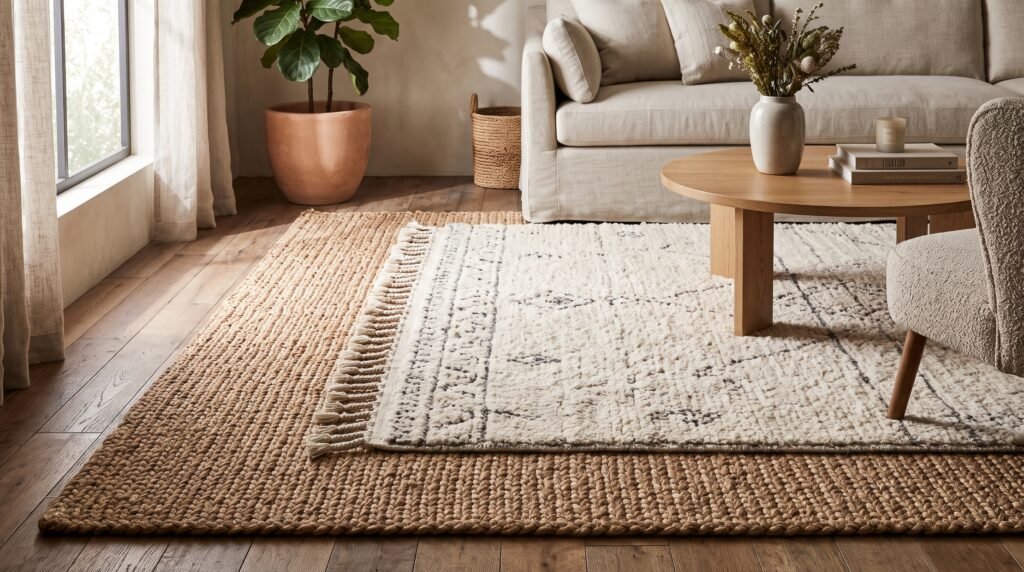
Texture is one of the most important parts of successful rug layering.
If both rugs have similar colours and textures, the combination may look flat. Using contrasting materials creates more depth.
Try these combinations:
- Jute and wool
- Sisal and cotton
- Flatweave and shag
- Natural fibre and woven patterns
- Smooth cotton and textured wool
For example, a flat jute rug underneath a soft wool rug can create an interesting contrast.
When decorating for colder months, textured materials such as wool and thicker woven rugs can also make a room feel visually warmer and more inviting.
4. How to Layer Rugs in a Living Room
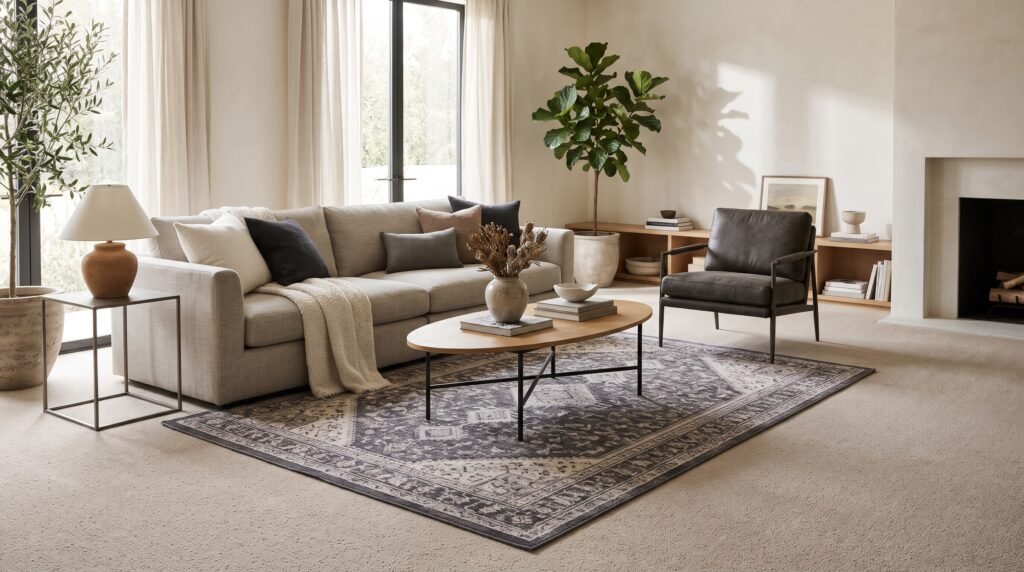
The living room is one of the easiest places to experiment with layered rugs.
Start by choosing a large rug that fits your main seating area. Position it beneath the sofa and chairs so the furniture feels connected.
Next, place a smaller decorative rug over the base rug.
Here are some combinations to try:
Neutral and patterned: Place a cream rug underneath a smaller vintage-inspired rug.
Natural and modern: Combine a jute base rug with a simple geometric design.
Soft and cosy: Layer a flatweave rug with a smaller plush rug near your seating area.
Bohemian style: Use a natural fibre rug underneath a colourful, patterned rug.
Avoid covering too much of the base rug with furniture or accessories. Allow enough of the bottom layer to remain visible so the arrangement looks intentional.
For more inspiration, explore our small dining area ideas for apartments for ways to style compact shared spaces.
5. How to Layer Rugs on Carpet
You don’t need hardwood or tile floors to enjoy layered rugs. You can also place an area rug over existing carpet.
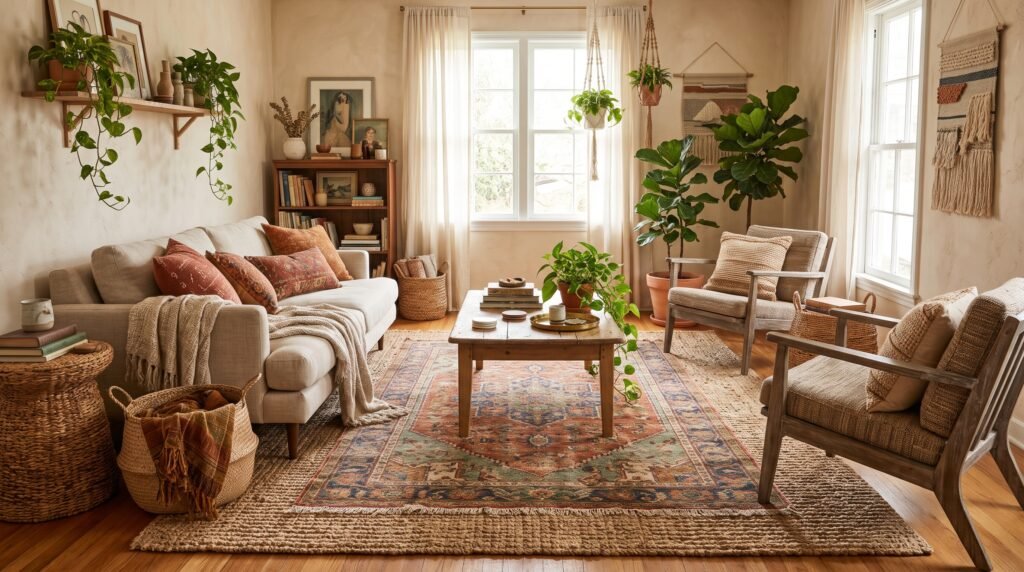
This is particularly useful if you’re renting or want to update an older carpet without replacing it.
Follow these tips:
- Choose a low-pile or tightly woven base rug.
- Select a top rug that complements the carpet colour.
- Avoid extremely thick combinations that create uneven surfaces.
- Use a suitable rug-to-carpet gripper to reduce movement.
- Check the edges regularly for wrinkles or bunching.
A flatweave rug over a neutral carpet can create a clean, simple look. If your carpet already has a noticeable pattern, choose a simpler top rug to avoid visual clutter.
Always check that the rug and gripper are suitable for your carpet type before using them.
6. Try a Boho Rug Layering Style
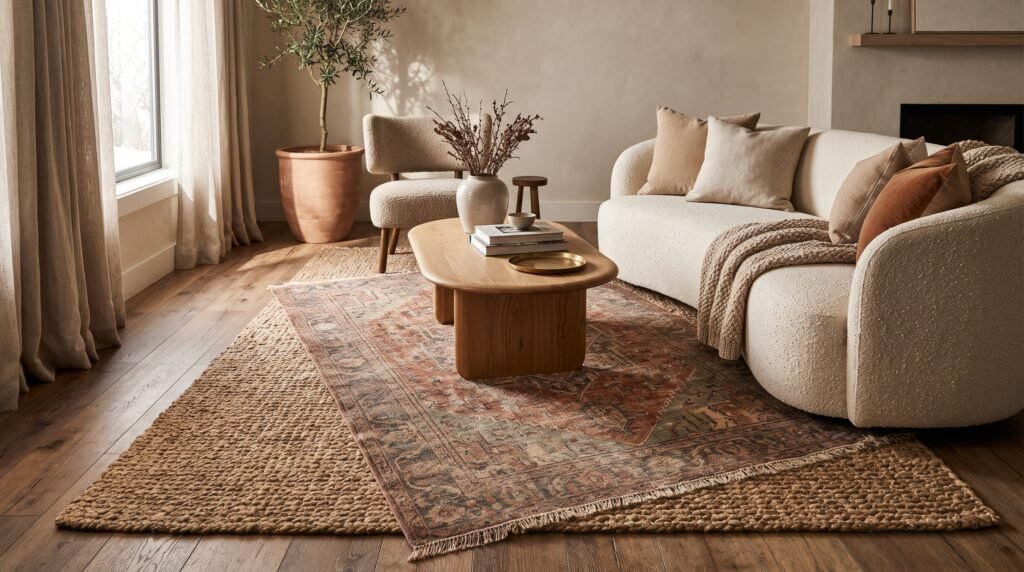
Bohemian decor is a great choice if you enjoy colourful, relaxed interiors.
This style allows you to combine different patterns, textures, and earthy colours.
For a balanced boho look, try:
- A natural jute base rug.
- A smaller vintage-inspired patterned rug.
- Warm shades of rust, terracotta, or olive.
- Soft cushions with complementary patterns.
- Natural materials such as wood and woven baskets.
You don’t need to use several bold patterns at once. Start with two rugs and repeat a few colours elsewhere in the room.
This helps the space feel coordinated rather than cluttered.
7. How to Layer Rugs in a Bedroom
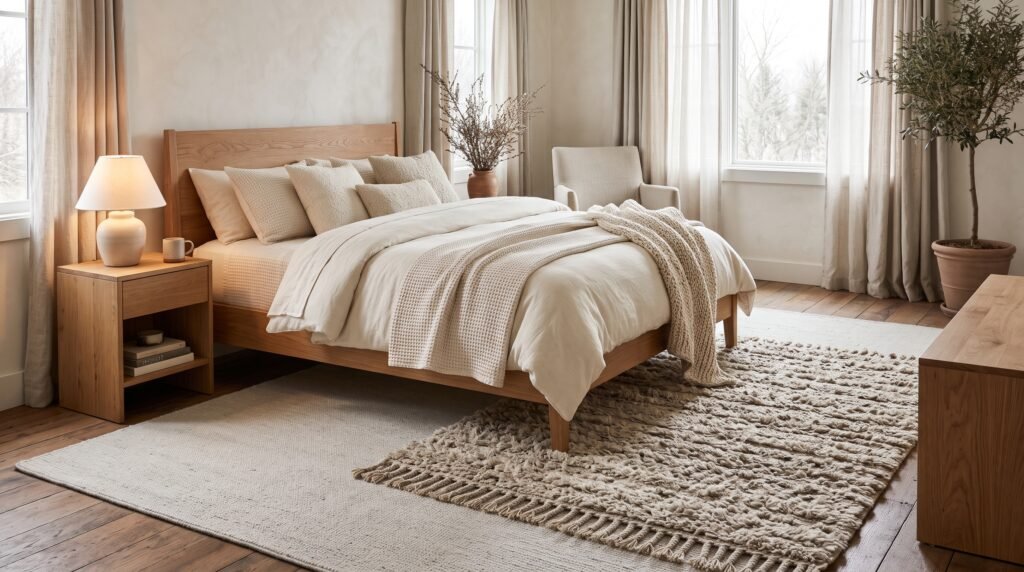
Rug layering can also make a bedroom feel more comfortable and visually complete.
One option is to place a larger rug underneath the bed and add a smaller decorative rug near the foot of the bed.
You can also use two matching runners along the sides of the bed if you prefer a symmetrical look.
Consider these combinations:
- A cream base rug with a soft textured top rug.
- A neutral wool rug with a subtle patterned design.
- A natural fibre rug with a smaller vintage-style rug.
Choose materials that feel comfortable underfoot, especially in areas where you walk barefoot.
If you enjoy creating comfortable bedroom spaces, you may also like our guide to small bedroom window seat ideas.
8. Keep the Rugs Secure and Properly Positioned
A beautiful rug arrangement should also be practical and safe.
Layered rugs can move, wrinkle, or bunch up, especially in busy areas.
To keep them in place:
- Use an appropriate non-slip rug pad or gripper.
- Make sure the pad is compatible with both the flooring and rug backing.
- Keep rug edges flat.
- Avoid placing thick rugs where doors need to swing open.
- Check the arrangement regularly, particularly in high-traffic areas.
For additional guidance, read this Lowe’s guide to choosing area rugs and rug pads.
Common Rug Layering Mistakes to Avoid
Even attractive rugs can look out of place when they’re combined incorrectly.
Watch out for these common mistakes:
Choosing rugs that are too similar: If both rugs have the same colour, pattern, and texture, the layered effect may be difficult to notice.
Using too many patterns: Several competing patterns can make a room feel visually overwhelming. Keep one rug simpler when the other has a bold design.
Ignoring rug proportions: A tiny rug placed over an almost equally sized base rug may not create the layered appearance you’re looking for.
Forgetting about safety: Loose rug edges can become tripping hazards. Always use suitable grippers and check for movement.
Ignoring furniture placement: Rugs should complement the furniture arrangement instead of looking like separate decorative pieces.
Final Thoughts
Learning how to layer rugs is an easy way to add texture, colour, and personality to your home.
Start with a larger neutral base rug, add a smaller decorative layer, and experiment with different materials and patterns until you find a combination that suits your space.
Whether you prefer a modern living room, a relaxed boho interior, or a cosy bedroom, thoughtful rug layering can help bring the entire room together.
You don’t need to buy everything at once. Start with rugs you already own and experiment with different arrangements before investing in new pieces.
Frequently Asked Questions
Can you put one rug on top of another rug?
Yes. You can place a smaller decorative rug over a larger base rug to create a layered look. Choose complementary colours, textures, and sizes, and make sure both rugs remain secure.
How much bigger should the bottom rug be?
A useful starting point is to make the bottom rug approximately 6–12 inches larger than the top rug on each visible side. You can adjust the proportions to suit your room.
Can you layer rugs on carpet?
Yes. Choose suitable rug materials and use a rug-to-carpet gripper to help reduce movement. Avoid thick combinations that create uneven surfaces.
What rugs look best layered together?
Natural fibre rugs, flatweave rugs, wool rugs, and patterned decorative rugs can work well together. The best combination depends on your room’s colours, furniture, and decorating style.
Can you layer two patterned rugs?
Yes. Choose patterns with at least one or two complementary colours. If one rug has a bold design, consider using a more subtle pattern for the other.
Is rug layering suitable for small living rooms?
Yes. A larger base rug with a smaller decorative rug can help define a seating area. Keep the colours coordinated and avoid overly bulky combinations.
How do you stop layered rugs from sliding?
Use suitable non-slip rug pads or grippers designed for your flooring type. Check the rugs regularly for bunching, curled edges, or movement.