Table of Contents
During winter, do you notice water droplets collecting on the inside of your windows every morning? You wipe them away, but they seem to return the next day. This is a common household problem, especially in homes with poor ventilation, older windows, or excess indoor moisture.
Learning how to stop window condensation in winter can help keep your windowsills dry, reduce indoor moisture, and lower the risk of mould developing around windows.
The good news is that you don’t always need expensive replacement windows to manage the problem. Simple changes to your daily routine, better airflow, and a few affordable improvements can make a difference.
In this guide, you’ll discover 11 practical ways to reduce window condensation in winter, including renter-friendly solutions for apartments and small homes.
What Causes Window Condensation in Winter?

Window condensation happens when warm, moisture-filled indoor air comes into contact with cold window glass. As the air cools near the glass, water vapour turns into tiny water droplets.
This is why you may notice condensation early in the morning, particularly after sleeping, cooking, showering, or drying clothes indoors.
Common causes include:
- Poor ventilation throughout the home.
- High indoor humidity.
- Drying wet clothes indoors.
- Long hot showers without ventilation.
- Cooking without using an extractor fan.
- Cold or poorly insulated windows.
- Heavy curtains that restrict airflow around the glass.
Occasional condensation may not be a serious concern. However, regularly wet windows and damp window frames should not be ignored because persistent moisture can contribute to mould growth.
For more information, read the EPA’s guide to controlling moisture in your home.
11 Practical Ways to Stop Window Condensation in Winter
1. Wipe Away Water Droplets Every Morning
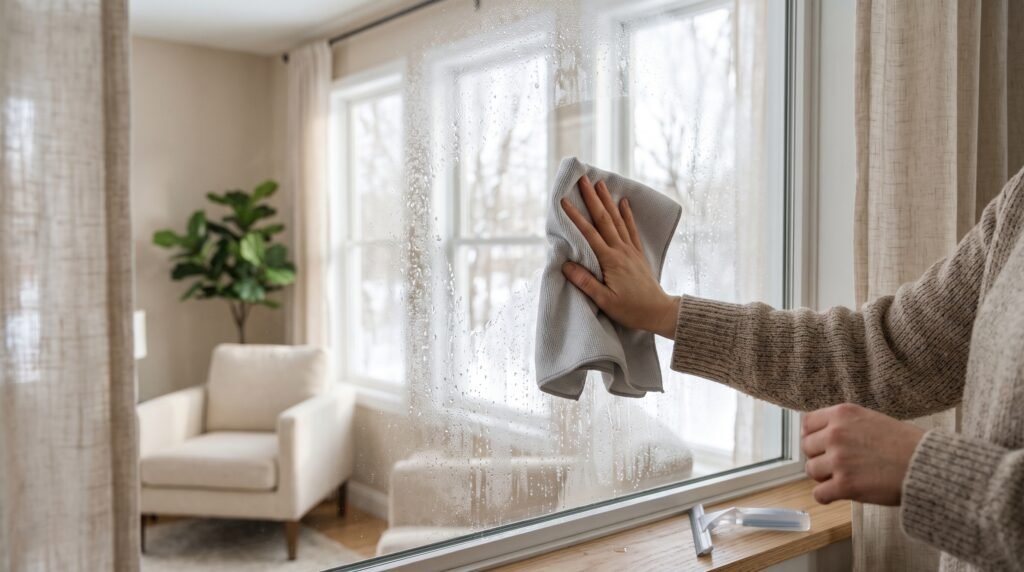
One of the easiest ways to manage window condensation is to remove the water as soon as you notice it.
Use a clean microfiber cloth or a window squeegee to wipe moisture from the inside of the glass.
Pay attention to:
- Window corners.
- Bottom edges of the glass.
- Window frames.
- Windowsills.
Don’t leave collected water sitting on wooden windowsills or around the frame. Dry these areas with a separate cloth.
This simple habit won’t prevent condensation from forming, but it helps stop excess water from remaining on surfaces.
2. Open Windows Briefly for Fresh Air
Keeping every window closed throughout winter may seem like the best way to stay warm. However, it can also trap moisture inside your home.
Opening windows briefly when outdoor conditions allow can help replace humid indoor air with fresh air.
Try opening a window for a short period in the morning or after activities that produce moisture.
If your home has trickle vents or adjustable window vents, keep them open according to the manufacturer’s instructions.
Avoid leaving windows open for long periods in extremely cold weather. The aim is to improve ventilation without unnecessarily cooling your home.
3. Use Bathroom Exhaust Fans After Showering
Hot showers release moisture into the air, and that moisture can travel into nearby rooms and settle on cold windows.
If your bathroom has an exhaust fan, switch it on while showering and leave it running afterward according to its instructions.
You can also:
- Keep the bathroom door closed while showering.
- Open a bathroom window when weather and privacy allow.
- Wipe wet bathroom surfaces after use.
- Check that the exhaust fan is working properly.
A bathroom fan should ideally vent moisture outside rather than into an attic or another enclosed space.
4. Use Your Kitchen Extractor Fan While Cooking
Cooking is another everyday activity that adds moisture to indoor air.
Boiling water, preparing soups, and steaming vegetables can release moisture into the kitchen.
To reduce excess humidity:
- Switch on your extractor fan when cooking.
- Use lids on boiling pots and pans.
- Avoid leaving water boiling longer than necessary.
- Keep the kitchen door closed when practical.
- Make sure the extractor fan vents outdoors.
These small habits can help prevent cooking moisture from spreading throughout your home.
5. Avoid Drying Wet Clothes Near Windows
Drying laundry indoors during winter is convenient, especially when outdoor weather is cold or rainy.
However, wet clothes release moisture into the surrounding air as they dry. This can increase indoor humidity and contribute to condensation.
If possible, dry clothes outdoors when weather conditions permit.
When indoor drying is necessary:
- Choose a well-ventilated room.
- Use an extractor fan or suitable ventilation.
- Leave enough space between garments.
- Avoid placing drying racks directly against cold windows.
- Consider a properly vented tumble dryer if available.
If indoor laundry regularly causes moisture problems, a dehumidifier may also help.
6. Keep Curtains and Blinds Slightly Away From the Glass
Heavy curtains can make a bedroom or living room feel warm and comfortable during winter.
However, tightly closed curtains may restrict warm air from reaching the window surface.
Try these simple adjustments:
- Open curtains during daylight hours.
- Avoid letting thick fabric rest directly against the glass.
- Leave enough space for air to circulate.
- Choose window treatments that allow airflow around the window.
You don’t need to remove your winter curtains. A little extra space around the window can help improve circulation.
If you’re updating a compact living space, explore our curtain ideas for small living rooms for practical inspiration.
7. Maintain a Comfortable Indoor Temperature
A very cold room can make condensation more likely because cold window surfaces allow moisture to collect more easily.
Try to maintain a reasonably consistent indoor temperature instead of allowing rooms to become extremely cold.
You can:
- Avoid switching heating completely off for long periods if this causes rooms to become very cold.
- Keep interior doors open where appropriate to improve warmth and airflow.
- Use curtains without blocking radiators.
- Check for noticeable drafts around windows and doors.
Heating alone won’t solve excessive humidity, so combine comfortable temperatures with proper ventilation.
8. Use a Dehumidifier When Indoor Humidity Is High
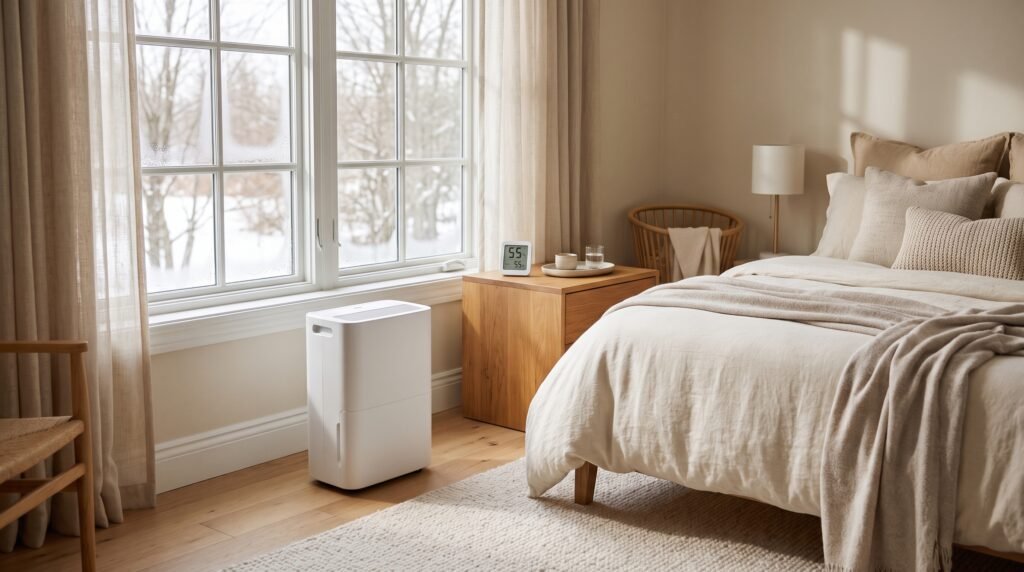
If condensation keeps returning despite better ventilation and daily cleaning, excess indoor humidity may be part of the problem.
A dehumidifier removes moisture from the air and can be useful in bedrooms, living rooms, and other areas where dampness repeatedly develops.
Before buying one, consider:
- The size of the room.
- The moisture level in your home.
- The appliance’s recommended room coverage.
- Noise levels, especially for bedrooms.
- Energy consumption.
- Whether the water tank is easy to empty.
A small hygrometer can help you monitor indoor humidity.
The US Environmental Protection Agency recommends keeping indoor relative humidity below 60%, ideally between 30% and 50%. During very cold weather, the appropriate level may need to be lower to prevent condensation on windows.
You can read the EPA’s moisture and mould guidance for more information about managing indoor moisture.
9. Check Windows for Drafts and Damaged Seals
Older windows and damaged seals can allow cold air to enter your home.
When the glass and surrounding frame become very cold, condensation may become more noticeable.
Inspect the following areas:
- Cracked window caulking.
- Loose weatherstripping.
- Gaps around window frames.
- Damaged seals.
- Loose or poorly fitted window panels.
For small gaps around suitable window frames, removable weatherstripping may provide a practical temporary improvement.
Renters should ask their landlord or property manager before making permanent changes.
If you notice moisture between the panes of double-glazed windows, the sealed glass unit may have failed. This usually requires professional inspection rather than simply wiping the glass.
10. Move Furniture Away From Cold Exterior Walls
Condensation doesn’t only affect windows. It can also develop on cold walls, particularly behind large furniture where airflow is limited.
A wardrobe, sofa, or bed placed tightly against an exterior wall may restrict air circulation.
Try leaving a small gap between large furniture and exterior walls.
Also consider:
- Avoiding overcrowded corners.
- Keeping air vents unobstructed.
- Allowing air to circulate behind wardrobes.
- Checking hidden areas occasionally for damp patches.
If you have a small bedroom, keeping the space organized can make it easier to maintain good airflow. Explore our guide to small bedroom storage ideas for practical ways to organize furniture and make better use of limited space.
11. Consider Window Insulation Improvements

If condensation remains a regular problem, improving window insulation may be worth considering.
Cold glass is more likely to attract condensation when indoor humidity is high.
Depending on your budget and window type, possible improvements include:
- Properly fitted weatherstripping.
- Repairing damaged window seals.
- Interior window insulation film.
- Secondary glazing.
- Upgrading to better-insulated windows.
For renters, removable insulation film may be an option if permitted by the landlord and suitable for the window.
For homeowners, a qualified window professional can assess whether improved glazing or repairs would help.
You can explore ENERGY STAR’s residential windows and doors guidance to learn more about energy-efficient window options.
Remember that insulation and ventilation need to work together. Making a home more airtight without maintaining adequate ventilation can trap moisture indoors.
How to Prevent Window Condensation in Winter Overnight
If your windows are wet every morning, a simple evening routine may help reduce the problem.
Before going to bed:
- Wipe away any existing water droplets.
- Avoid drying wet laundry in the bedroom.
- Use bathroom and kitchen exhaust fans when needed.
- Make sure curtains aren’t pressed tightly against the glass.
- Keep air vents clear.
- Check that your bedroom isn’t excessively humid.
- Maintain a comfortable indoor temperature.
These habits can help reduce moisture buildup overnight.
Making a bedroom comfortable doesn’t always require expensive furniture or renovations. You can also explore our guide to small bedroom ideas on a budget for affordable ways to improve your space.
When Is Window Condensation a Sign of a Bigger Problem?
Occasional moisture on the inside of a window doesn’t necessarily indicate serious damage.
However, pay attention if you notice:
- Water collecting on windows every day.
- Black or dark spots around window frames.
- Peeling paint near windows.
- Soft or damaged wooden windowsills.
- A persistent musty smell.
- Damp patches that keep returning.
- Moisture between double-glazed window panes.
If mould appears repeatedly, identify and address the moisture source rather than simply cleaning the visible marks.
For larger mould problems, recurring leaks, or damaged building materials, seek professional help.
Renters should report persistent leaks, dampness, or suspected structural problems to their landlord or property manager promptly.
Final Thoughts
Learning how to stop window condensation in winter doesn’t have to involve expensive home improvements. Simple habits such as wiping wet windows, improving ventilation, and controlling indoor humidity can make a difference.
Start with simple habits such as wiping wet windows, improving ventilation, using kitchen and bathroom exhaust fans, and avoiding unnecessary indoor moisture.
If the problem continues, check your window seals, monitor indoor humidity, and consider insulation improvements.
Most importantly, don’t ignore recurring dampness. Taking care of excess moisture early can help protect your windows, walls, and the overall condition of your home.
Frequently Asked Questions
1. Why do my windows get wet inside during winter?
Windows become wet when warm, moisture-filled indoor air touches cold glass. The moisture in the air turns into water droplets on the glass surface.
2. Should I open windows in winter to prevent condensation?
Briefly opening windows when outdoor conditions allow can help remove humid indoor air. You can also use exhaust fans and window vents to improve ventilation without keeping windows open for long periods.
3. Does a dehumidifier stop window condensation?
A dehumidifier can help reduce excess indoor moisture, which may reduce condensation. However, it won’t fix damaged window seals, water leaks, or insulation problems.
4. Are thermal curtains good for preventing condensation?
Thermal curtains can help improve comfort, but tightly closed curtains may restrict airflow around cold window glass. Leave enough space for air to circulate.
5. Can window condensation cause mould?
Yes. Persistent moisture around windows can create conditions that support mould growth, especially on damp window frames, seals, and surrounding materials.
6. What is the ideal indoor humidity level in winter?
The EPA recommends indoor relative humidity below 60%, ideally between 30% and 50%. In very cold weather, lower humidity may be necessary depending on outdoor temperatures and window insulation.
7. Why do I get condensation on my bedroom windows overnight?
People release moisture through breathing while sleeping. When this moisture collects in a poorly ventilated bedroom and meets cold window glass, condensation can form.
8. Should I worry about condensation between double-glazed windows?
Yes, it may indicate that the sealed unit has failed. It is worth having the window inspected by a qualified professional.