Small Kitchen Storage Ideas for Pakistani Homes: 11 Smart Tips
A small kitchen can be challenging to organize, especially when you need space for spices, cookware, groceries, and everyday cooking essentials. The good news is that you do not always need a renovation or expensive cabinets to make your kitchen more organized.
These small kitchen storage ideas for Pakistani homes focus on practical organization, affordable improvements, and smarter ways to use the space you already have. From arranging masala jars to organizing cabinets and keeping countertops clear, these simple tips can make everyday cooking more convenient.
Whether you live in an apartment or a house with a compact kitchen, these small kitchen storage ideas for Pakistani homes can help you create a cleaner, more functional cooking space without unnecessary spending.
These small kitchen storage ideas for Pakistani homes are designed to help you organize everyday cooking essentials, save cabinet space, and keep your kitchen practical without spending too much money.
11 Small Kitchen Storage Ideas for Pakistani Homes
1. Organize Masala Jars in One Dedicated Area
Spices are essential in many Pakistani kitchens, but keeping them scattered across the countertop can make the space look untidy.
Create one dedicated area for your everyday masala jars. You could use a small spice rack, a drawer organizer, or a compact shelf near your food preparation area.
Keep frequently used spices within easy reach and store occasional ingredients separately. Clear, labeled containers can also help you identify spices quickly.
Choose containers with secure lids to protect spices from moisture and kitchen splashes. Keep them away from direct heat and steam to help preserve their quality.
Small tip: Before buying new jars, measure your available shelf or drawer space so the containers fit properly.
2. Use Vertical Space for Extra Storage
When countertop space is limited, look at the unused wall space above it.
Depending on your kitchen layout, you may be able to install a small shelf for lightweight kitchen essentials, use a wall-mounted rack for utensils, or add hooks for frequently used tools.
Vertical storage can keep everyday items accessible without filling the countertop with extra containers.
Avoid placing shelves directly above a cooking flame or where grease and steam will make items difficult to clean. Always use suitable wall fixings and keep heavy objects securely stored.
3. Make Better Use of Kitchen Cabinets
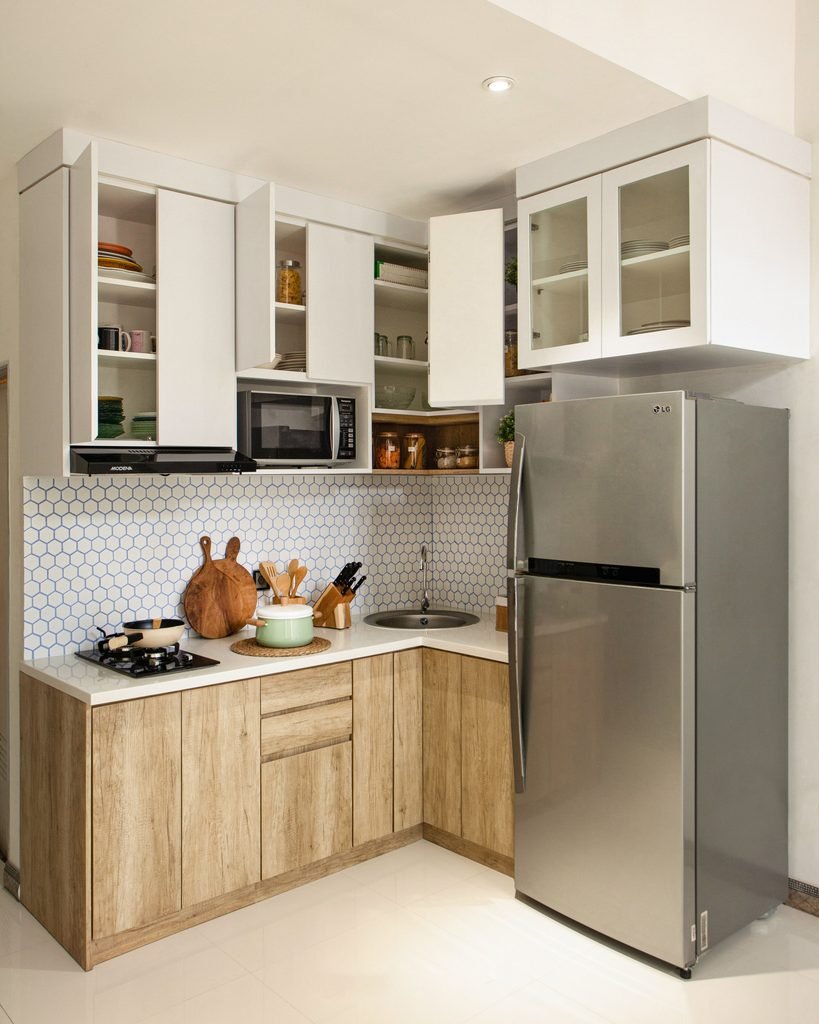
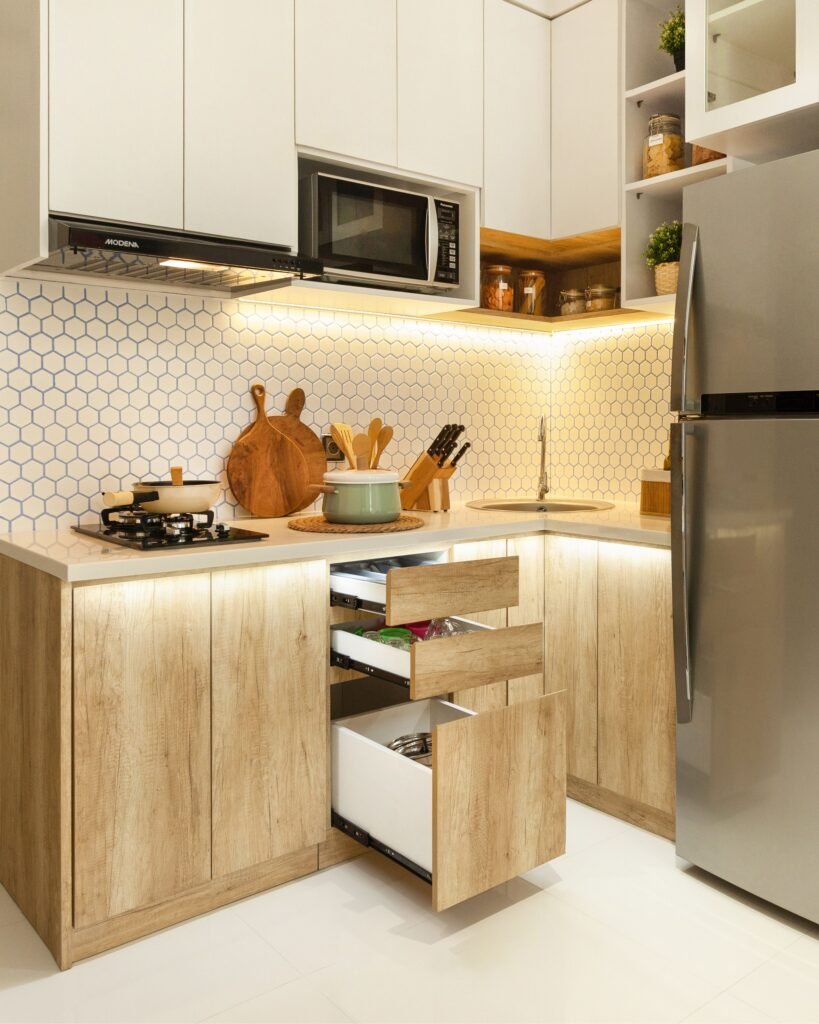
Cabinets often contain more usable space than it first appears, but items can become difficult to reach when they are stacked randomly. Making better use of existing cupboards is one of the simplest small kitchen storage ideas for Pakistani homes. Group similar items together and keep frequently used dishes and cookware within easy reach.
Start by emptying one cabinet at a time. Remove anything broken or no longer needed, group similar items together, and return the essentials in a logical order.
Try these simple cabinet organization ideas:
- Keep everyday plates and bowls on an easily accessible shelf.
- Store large pots together instead of spreading them across several cabinets.
- Place lighter, less frequently used items on higher shelves.
- Use shelf risers where there is enough vertical clearance.
- Keep cleaning products separate from food and cooking utensils.
You do not need to reorganize the entire kitchen in one day. Improving one cabinet at a time makes the process easier.
4. Store Pots, Pans, and Lids Separately
Cooking pots, frying pans, and their lids can take up considerable space, especially in a small kitchen.
Stack compatible pots and pans together, placing protective separators between delicate surfaces when needed. Store lids upright in a suitable rack or divider instead of creating an unstable pile.
If you have deep drawers, adjustable dividers may help keep cookware organized. For cabinets, choose an organizer that fits the available dimensions and can support the weight of your cookware.
Keep the pots and pans you use most often in the easiest-to-reach area. Special cookware used only occasionally can be stored elsewhere.
5. Use Drawer Organizers for Everyday Utensils
A crowded utensil drawer makes cooking less convenient because finding a spoon, peeler, or measuring tool takes longer.
A simple drawer organizer can separate cutlery, serving spoons, spatulas, and other small tools.
Before buying an organizer, measure the drawer’s width, depth, and usable height. Choose adjustable compartments if your utensils vary in size.
Avoid keeping too many duplicate tools in the same drawer. Store frequently used utensils near your preparation area and move rarely used items to a separate location.
This small change can make everyday kitchen tasks feel more manageable.
6. Create a Separate Area for Groceries
Rice, flour, lentils, cooking oil, and packaged groceries need a suitable place in many Pakistani households.
Instead of placing grocery bags wherever space is available, create a designated pantry area. This could be a cabinet, a narrow shelving unit, or a section of an existing cupboard.
Use clean, food-safe containers with secure lids for ingredients that need protection from moisture and pests. Label containers clearly, and keep dry foods away from sinks, damp walls, and heat sources.
Arrange groceries so older products are used first. This helps reduce food waste and prevents forgotten packets from collecting at the back of a shelf.
If you buy groceries in bulk, divide the storage into everyday supplies and backup stock. Keep backup items in a separate location when possible.
A narrow trolley can provide extra storage in a kitchen that has a suitable unused gap.
When planning small kitchen storage ideas for Pakistani homes, consider how you buy and use everyday groceries. Store rice, flour, lentils, and spices in suitable containers, and keep them in a clean, dry place.
For better food storage practices, you can also consult the Food Safety and Inspection Service for helpful food safety guidance.
7. Choose a Slim Storage Trolley When Space Allows
Depending on its design, it may hold sealed pantry items, lightweight containers, or frequently used kitchen supplies.
Before purchasing one, measure the gap carefully and make sure the trolley will not block a doorway, cabinet, refrigerator, or walking path.
A trolley with wheels can be convenient, but it should remain stable and should not be placed near an open flame or hot cooking surface.
If your kitchen is already very tight, a trolley may create more obstacles than benefits. In that case, improving an existing cabinet may be a better option.
8. Keep the Countertop Mostly Clear
A clear countertop provides more room for chopping vegetables, preparing dough, and organizing ingredients while cooking.
Start by identifying which items genuinely need to stay on the counter. You might keep an appliance used daily, a utensil holder, or a small container for essential cooking tools.
Move occasional appliances and decorative items to cabinets or shelves when practical.
You do not need to remove everything to create a clean look. The goal is to leave enough working space for your regular cooking routine.
A simple countertop arrangement can also make a small kitchen appear more spacious without changing its layout.
9. Use the Space Under the Sink Carefully
The cabinet under the kitchen sink is often awkward to organize because the plumbing occupies part of the space.
You can use suitable removable bins or small organizers to store sponges, gloves, and cleaning supplies. Choose products that fit around the pipes and can be removed easily for cleaning.
Check the cabinet periodically for moisture or leaks, and avoid storing food, spices, or dry groceries in this area.
Keep cleaning products in their original containers and away from children. An under-sink organizer should make supplies easier to access without hiding plumbing problems.
10. Organize the Refrigerator and Nearby Storage
A disorganized refrigerator can lead to wasted food and unnecessary purchases.
Group similar foods together, use suitable containers for leftovers, and keep frequently used ingredients in practical locations. Follow food-safety guidance for refrigeration and storage times rather than relying on appearance alone.
If your kitchen has a cabinet or shelf near the refrigerator, use it for appropriate pantry supplies rather than crowding the refrigerator’s top or sides.
Leave the ventilation clearance recommended by the appliance manufacturer, and avoid placing heat-sensitive groceries near cooking appliances.
Good organization makes it easier to see what you already have before preparing a shopping list.
11. Choose Storage That Is Easy to Clean
Kitchen storage should be practical as well as attractive. In a frequently used cooking space, shelves and organizers can collect dust, grease, and food residue.
Choose storage products with smooth surfaces that can be wiped down easily. Use containers that are suitable for their intended purpose and can be cleaned regularly.
Closed cabinets may help protect items from dust and cooking splashes, while open shelves can make frequently used essentials easier to reach. The right choice depends on your kitchen’s layout and cleaning routine.
Avoid filling every available space with organizers. Too many containers can make the kitchen harder to maintain and leave less room for actual food preparation.
Budget-Friendly Small Kitchen Storage Ideas for Pakistani Homes
You can improve kitchen organization without replacing cabinets or buying expensive accessories. Start by reusing suitable containers, adding drawer dividers where needed, and arranging everyday cooking essentials within easy reach.
Before purchasing new organizers, check which areas need improvement. Measure shelves and drawers, remove unused items, and focus on practical solutions that fit your budget.
The most useful storage changes are often simple ones that make daily cooking easier without creating extra clutter.
Common Small Kitchen Storage Mistakes to Avoid
Even useful storage products can create problems when they are poorly chosen or placed.
Buying organizers before measuring: Always measure shelves, drawers, and cabinets first.
Keeping too many items: Unused utensils and duplicate containers occupy valuable space. Keep the essentials and donate or discard items responsibly.
Ignoring safety: Keep flammable items away from cooking flames and heavy objects securely stored.
Blocking the working area: Storage should not prevent you from opening cabinets, using appliances, or moving comfortably around the kitchen.
Using open shelves for everything: Open storage can look attractive, but items may need more frequent cleaning in a kitchen exposed to cooking grease and dust.
The best small kitchen storage ideas for Pakistani homes are the ones that match your available space, cooking habits, and budget. Choose solutions that are easy to use, clean, and maintain.
Frequently Asked Questions
How can I organize a small kitchen in Pakistan?
Start by decluttering, grouping spices and groceries, organizing cookware, and using existing cabinets more efficiently. Add shelves or organizers only after measuring the available space.
How do I store masala jars in a small kitchen?
Use a dedicated spice rack, drawer organizer, or suitable shelf. Keep frequently used spices accessible, label containers, and protect them from moisture and direct heat.
How can I add kitchen storage without renovation?
Try drawer dividers, cabinet shelf risers, suitable hooks, labeled containers, and a better arrangement of existing cookware. These changes may improve organization without replacing cabinets.
Are open shelves good for small kitchens?
Open shelves can make some kitchens feel less enclosed and keep essentials accessible. However, they can collect dust and cooking residue, so consider how often you cook and how much cleaning you can manage.
What should I store under the kitchen sink?
This area is generally better suited to appropriate cleaning supplies and accessories rather than food. Keep the space dry, check for leaks, and store chemicals safely away from children.
Final Thoughts
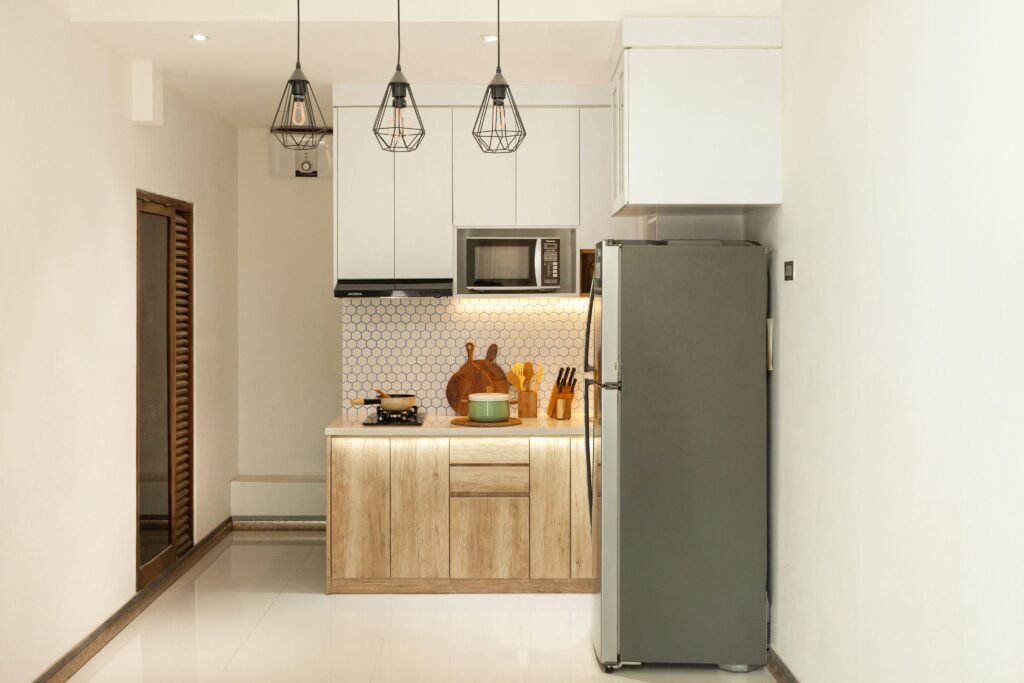
A small kitchen can be practical and attractive when every storage area has a clear purpose. Organize masala jars, make better use of cabinets, store cookware carefully, and keep enough countertop space for preparing meals. If you are looking for more affordable ways to refresh your home, explore our guide to small bedroom ideas on a budget for simple and practical decorating inspiration.
With these small kitchen storage ideas for Pakistani homes, you can make better use of your existing space and create a kitchen that feels more organized and comfortable.
Start with the storage you already have before investing in new products. By making small improvements one area at a time, you can create a kitchen that is easier to clean, more comfortable to use, and better suited to everyday life in a Pakistani home.
The right small kitchen storage ideas for Pakistani homes do not need to be expensive. With a little planning and regular organization, even a compact kitchen can become more functional and welcoming.